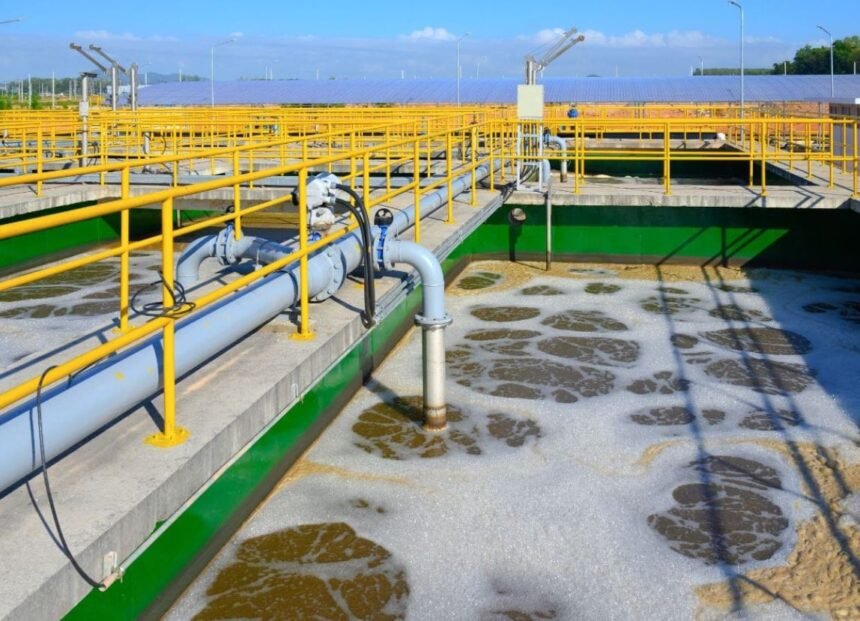
Angola has secured approximately US $629M in international financing to advance the second phase of the Quilonga Grande Water Supply Project, a strategic initiative aimed at strengthening water infrastructure and expanding access to treated water in Luanda and Icolo e Bengo provinces.
The financing package, was arranged by Standard Chartered, which acted as export credit agency coordinator, structuring bank, sole bookrunner and mandated lead arranger. The transaction received backing from France’s export credit agency, Bpifrance Assurance Export, while French public development bank Sfil provided refinancing support.
The project is being developed for Empresa Pública de Águas de Luanda (EPAL), Angola’s public water utility, under the Ministry of Energy and Water. Construction works are being undertaken by a consortium that includes OPAIA Construction, Casais Construction, CNT Bau and GAUFF Engineering.
READ: KPC lands US $725M crude storage contract to support Kenya’s oil export plans
Designed to draw water from the Kwanza River, the Quilonga Grande scheme will have the capacity to produce and distribute up to 518,000 cubic metres of treated water per day once completed. The infrastructure includes water treatment facilities, storage reservoirs and distribution networks intended to improve supply across several fast-growing urban areas.
Government officials report that construction has reached more than half of the planned works, with commissioning expected before the end of 2026. Upon completion, the project is projected to connect about 350,000 additional households to the water network, benefiting communities in Cacuaco, Viana, Mulenvos, Calumbo, Cabiri, Sequele, Bom Jesus and Catete.
The investment forms part of Angola’s broader efforts to address persistent water supply challenges driven by rapid urbanisation and growing demand. While access to safe drinking water has improved in recent years, large sections of the population continue to face limited or unreliable services.
In addition to expanding water access, the project is expected to support employment, with more than 1,500 direct jobs anticipated during the construction phase. Authorities have also indicated that further distribution network upgrades will be required in developing urban districts as demand continues to increase. The Ministry of Energy and Water said EPAL has been instructed to optimise production from existing facilities while major infrastructure projects such as Quilonga Grande are brought into operation, helping to ease pressure on water supplies in the capital region.