Cameroon’s long-awaited Kribi oil refinery is expected to begin partial operations in the second half of 2026 almost two years ahead of its original June 2028 timeline marking the country’s first major new refining project in decades.
The refinery will initially process 10,000 barrels per day (bpd), around one-third of its planned 30,000 bpd capacity. At this level, it is expected to meet roughly 22% of national diesel and gasoline demand, significantly reducing Cameroon’s reliance on imported refined fuels.
The US $622M project is backed by Cstar Petroleum, Cameroon’s state-owned National Hydrocarbons Company (SNH), Tradex SA, and Ariana Energy. Once fully operational, the refinery is projected to cut fuel imports by nearly one-third, easing pressure on foreign exchange reserves and strengthening domestic energy security.
READ: Nigeria announces January 2026 licensing round
Kribi oil refinery
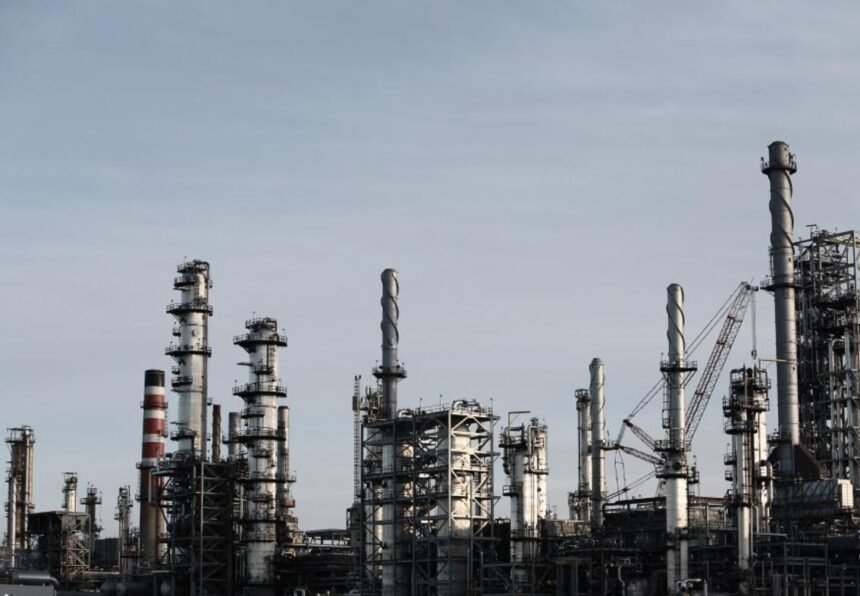
Located about five kilometres from the deep-water port of Kribi, the facility spans 250 hectares and is being developed as part of SNH’s broader energy infrastructure strategy. Preparatory works, including construction of a base camp, are already underway, with full-scale construction scheduled to begin in January 2026. Front-end engineering design (FEED) studies are reportedly 80% complete.
The refinery is being executed through Dubai-based CSTAR Refinery Project Management LLC-FZ. A construction consortium comprising RCG Turnkey Solutions, Global Process Systems, and Norinco International of China is overseeing works, while BGFI Cameroon is mandated to raise approximately US $215M in financing.
In addition to refining capacity, the complex will include a 250,000–300,000 cubic metre fuel storage terminal capable of handling diesel, gasoline, Jet A1, kerosene, and heavy fuel oil, positioning Kribi as a regional petroleum logistics hub.
Once operational, the refinery is expected to save Cameroon about US $680M annually in fuel imports, generate US $250M per year in marine and petrochemical exports, and create more than 7,000 direct and indirect jobs, alongside transferring technical skills to the local workforce.
Cameroon has depended heavily on imported refined products since a fire shut down the Sonara refinery in Limbe in 2019. Currently, diesel and gasoline are imported mainly from Nigeria, Equatorial Guinea, Gabon, France, and occasionally from the Middle East and Asia.
Although Cameroon produces a modest 40,000–60,000 bpd of crude oil, primarily from offshore fields in the Rio del Rey and Douala-Campo basins, oil remains a key contributor to government revenue. As older fields mature, expanding domestic refining capacity has become increasingly critical. The Kribi refinery is expected to enhance Cameroon’s energy resilience, reduce exposure to global price volatility, and strengthen its role as a Central African downstream energy hub.