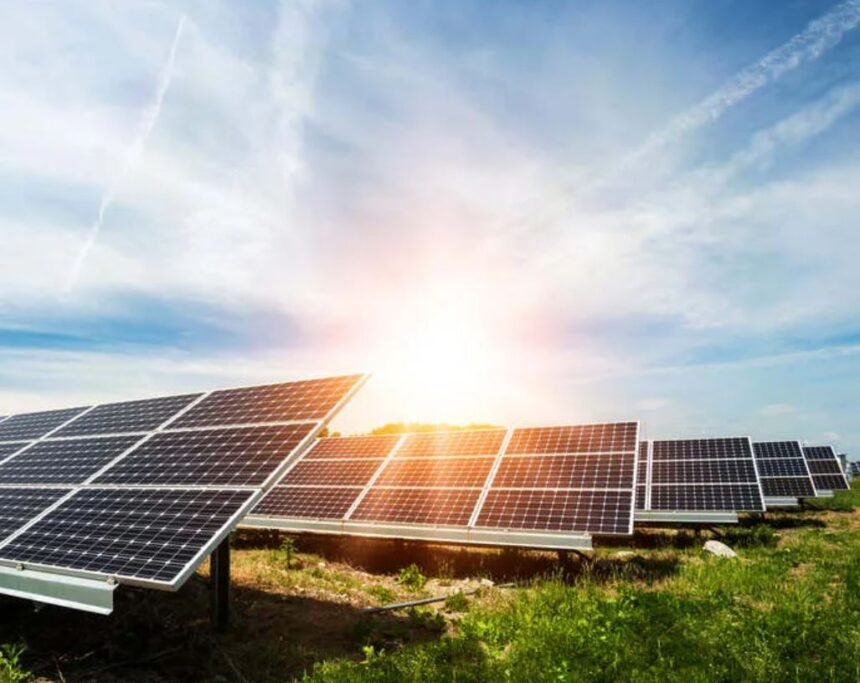
JA Solar has been selected as the exclusive photovoltaic (PV) module supplier for Teraco’s 120MW Sediba solar power project in South Africa’s Free State province, marking another milestone in the country’s expanding utility-scale renewable energy sector.
Under the agreement, JA Solar will supply high-efficiency n-type photovoltaic modules for the project, which is expected to produce more than 354,000MWh of electricity annually. The development is designed to support South Africa’s electricity supply while providing renewable power to Teraco’s data centre operations.
Teraco, which specialises in carrier-neutral, cloud-neutral and vendor-neutral data centre infrastructure, will benefit from the project through a power-wheeling arrangement involving local municipalities and state-owned utility Eskom. Electricity generated at the solar facility will be delivered to the national grid, with the corresponding renewable energy allocation used to meet part of Teraco’s electricity requirements.
READ: Tanzania’s TAZAMA Pipeline considers expansion
Sediba project
The Sediba project is scheduled to become operational by the end of 2026. Its development forms part of Teraco’s broader strategy to increase access to renewable electricity and reduce the carbon footprint of its data centre operations. The solar facility will operate under challenging environmental conditions, with the Free State location experiencing high summer temperatures, intense solar radiation, dust, seasonal thunderstorms and considerable temperature fluctuations. These factors place additional demands on solar equipment, making durability, efficiency and consistent electricity generation critical to the project’s long-term performance.
JA Solar’s selection followed technical assessments and product testing, with the company securing the exclusive supply contract based on the reliability and performance of its photovoltaic technology. Its n-type modules are engineered to maintain energy efficiency under elevated temperatures while offering resistance to hail and heavy mechanical stress.
For large-scale solar developments, equipment selection is increasingly influenced by lifecycle performance rather than initial electricity output alone. Factors such as module degradation, structural strength, manufacturing consistency and the ability to withstand changing weather conditions can significantly affect long-term project returns. JA Solar said its manufacturing processes incorporate standardised quality controls and supply-chain traceability measures. Materials used in production, including glass and soldering ribbon, are tracked to improve transparency and maintain quality standards throughout the manufacturing process.
The company is also positioning sustainability as a central part of its solar manufacturing operations. Its climate targets have received validation from the Science Based Targets initiative (SBTi), while its production facilities are implementing measures aimed at reducing emissions associated with photovoltaic module manufacturing. In addition, JA Solar operates nationally recognised green factories as part of its efforts to promote more sustainable industrial production.
The Sediba development comes amid growing interest among South African businesses in renewable electricity procurement through independent power generation and wheeling arrangements. Such structures allow major electricity consumers to access cleaner power while managing energy costs and meeting corporate sustainability commitments. The project is expected to demonstrate how utility-scale solar generation and electricity wheeling can support the energy requirements of large commercial and industrial consumers, particularly data centre operators with substantial and continuous power demands.