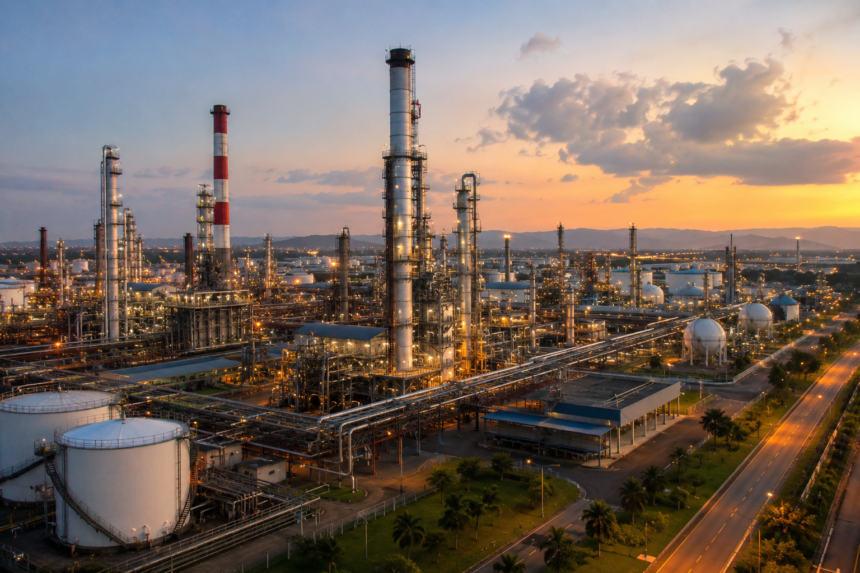
Kenya is accelerating plans for a proposed East Africa oil refinery valued at about $17 billion (approximately Sh2.2 trillion), positioning the country to host a regional petrochemical and energy hub serving multiple East African markets. Deputy President Kithure Kindiki says Kenya is now ramping up technical and policy work with East African Community (EAC) partners to agree on the location, governance and market integration framework for the multi-country facility, which has attracted interest from Nigerian industrialist Aliko Dangote.
Speaking in Nairobi after chairing a high-level meeting with key ministries and agencies, Kindiki noted that government institutions have been assigned clear mandates to develop the legal, regulatory and administrative structures needed to support the mega investment. The refinery is expected to be one of the largest in Africa once completed, boosting regional supply of refined products, underpinning industrial growth and helping shield East African economies from severe fuel price shocks driven by global disruptions such as the recent closure of the Strait of Hormuz.
Lamu positioned as preferred site
Lamu has emerged as the leading candidate to host the refinery, aligning with Kenya’s broader ambition to build an integrated port, logistics and energy corridor on the northern coast. The proposed facility is expected to have capacity in the range of 700,000 barrels per day, with an output geared towards supplying markets in Kenya, Uganda, South Sudan, the Democratic Republic of Congo and other neighbouring countries.
Feasibility studies and technical assessments are underway to confirm Lamu’s suitability, including land availability, environmental considerations, marine access, pipeline connectivity and potential for clustering storage, petrochemical and supporting industrial facilities. Lamu Governor Issa Timamy has backed the project, highlighting its potential to transform the county’s economy through jobs, auxiliary services and new infrastructure, while also calling for careful management of environmental and social impacts.
Regional, multi-stakeholder project structure
The Deputy President underscored that the refinery is conceived as a regional project, not just a Kenyan asset, and will involve coordination among several EAC member states, private investors and international partners. At the Nairobi meeting, Kindiki was joined by Cabinet Secretaries John Mbadi (Treasury), Opiyo Wandayi (Energy), Davis Chirchir (Roads) and Alice Wahome (Lands), along with Principal Secretaries and senior officials from investment promotion and other agencies, signalling the project’s cross-cutting nature.
President William Ruto has tasked Kindiki with leading government engagement with the sponsors and regional stakeholders, as well as steering the domestic coordination framework that will oversee feasibility, approvals and eventual implementation. Kindiki asked industry and local stakeholders to be patient as the necessary studies, consultations and policy work are completed, promising regular updates as major milestones are reached ahead of construction.
Implications for industrial and energy infrastructure
If realised, the $17 billion East Africa refinery in Lamu would significantly alter the region’s downstream landscape, creating a new anchor for storage, pipelines, marine export and inland distribution systems that would support wider industrialisation. For East African manufacturers and heavy industry players, a stable regional source of refined products could lower logistics constraints, reduce import dependency and improve planning around fuel-intensive operations.
The project also aligns with Kenya’s push to deepen value addition in the energy sector, moving beyond import and distribution towards more integrated refining and petrochemicals. As feasibility work advances, key areas for industry attention will include pipeline routing to inland markets, storage and terminal capacity, integration with regional power and transport corridors and the policy framework governing cross-border product flows.