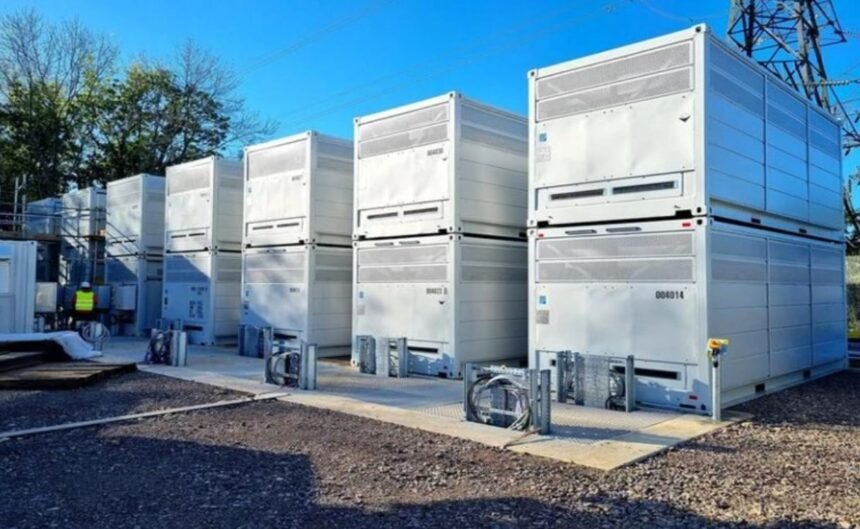
Namibia has commissioned the Omburu Battery Project, its first utility-scale battery energy storage system at the Omburu substation near Otjiwarongo. Developed by national utility NamPower, the project marks a significant step toward enhancing grid reliability and strengthening energy security in Namibia.
The Omburu battery system which aims to cut reliance on imported electricity, has a capacity of 54 MW/54 MWh and is designed to store electricity during periods of surplus supply and release it when demand rises. It can capture excess generation from renewable sources such as solar and wind, as well as lower-cost imported electricity during off-peak hours, and dispatch it during peak periods. This helps ease pressure on the grid and reduces the need for costly emergency power imports.
READ: Tunisia launches tender for 300MW solar power plant
Omburu Battery Project
The project was delivered with international financial and technical support. The German government, through KfW Development Bank, provided a grant of approximately US $23M, covering the majority of construction costs, while NamPower financed the remaining components, including grid integration. The engineering, procurement, and construction works were executed by a joint venture between Shandong Electrical Engineering & Equipment Group and Zhejiang Narada Power Source following a competitive tender process.
Beyond energy storage, the facility provides critical grid support services, including voltage regulation and rapid response to fluctuations in supply and demand. These capabilities are particularly important as Namibia expands its renewable energy capacity, where output can vary due to changing weather conditions.
The Omburu site, located in the Erongo Region, was strategically selected for its proximity to major demand centers and existing renewable energy installations. The project is also expected to serve as a blueprint for future storage developments, including the planned Lithops battery project. With the commissioning of the Omburu system, Namibia is advancing toward its goal of achieving a 70% renewable energy share by 2030, while reinforcing the resilience and sustainability of its power sector.