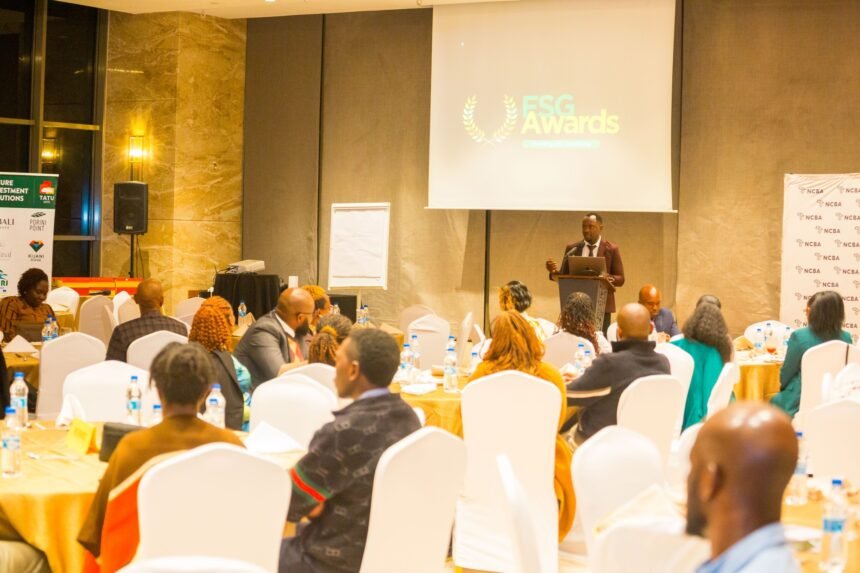
On the night of March 6th, as the 3rd Annual Kenya ESG Awards unfolded, the celebration of sustainability milestones was underscored by a harsh reality just outside the venue. Extreme rains paralyzed parts of Nairobi, flooding streets and disrupting lives, providing what organizers described as a “live case study” for why environmental action is a matter of urgent survival.
It was against this dramatic backdrop that PowerGen Renewable Energy received the Excellence in Clean Access Award. The recognition, organized by KENCTAD, was a powerful testament to the resilience of the sustainability community. But more importantly for the pumps and water sector, it served as a stark reminder that climate-resilient water infrastructure, clean energy, and community survival are now inextricably linked.
“The floods outside the doors made every acceptance speech a moment of reflection,” noted an event organizer. “They proved that climate action is not just a corporate pillar—it is an essential survival strategy for our cities and communities.” For the water industry, this means the “E” in ESG is no longer a checkbox; it is the difference between a community that can withstand a storm and one that is paralyzed by it.
The PowerGen ESG Award: A Blueprint for Resilience
PowerGen’s award acknowledges its long-term commitment to delivering reliable clean energy access guided by strict environmental, social, and governance (ESG) principles. However, its significance extends far beyond the renewable energy sector. The company’s model directly addresses a critical vulnerability exposed by the Nairobi floods: the fragility of infrastructure that depends on an unstable grid.
Reliable electricity, powered by decentralized solar mini-grids and standalone systems, is the backbone of sustainable water infrastructure. It is essential for powering:
- Flood mitigation systems like stormwater pumps and drainage controls.
- Water pumping stations and rural borehole systems that must operate even when the national grid fails.
- Water treatment plants that risk contamination and service interruption during extreme weather.
- Irrigation networks that must remain reliable through both drought and deluge.
- Solar water pumping solutions that eliminate fuel costs and reduce downtime.
As the Kenya ESG Awards demonstrated, the business community is recognizing that “resilience” must be built, not hoped for. PowerGen’s approach embeds this philosophy, integrating robust Health, Safety, Environment, and Security (HSES) frameworks to ensure that energy infrastructure—and the water systems it powers—can withstand environmental shocks.
Why ESG Standards Matter for Water Infrastructure
The PowerGen ESG Award also highlights a major shift in how infrastructure projects are evaluated across Africa. Investors and governments are increasingly prioritizing ESG in Africa as a prerequisite for funding.
For water sector stakeholders, this trend has direct implications:
- Integrated Solutions Win Tenders: Projects that bundle water pumping with dedicated renewable energy supply have a competitive advantage.
- Operational Reliability: Solar-powered water systems function independently of unstable national grids, ensuring continuous service during extreme weather.
- Environmental Protection: Strict frameworks ensure that water extraction does not harm surrounding ecosystems, preserving resources for future generations.
From Celebration to Action: The 2026 Challenge
The event, which brought together C-suite executives, policymakers, and sustainability leads, was defined by a dual narrative: the celebration of 2025’s ESG milestones and the sobering realization that “the bar for 2026 has been raised.”
The Nairobi floods climate resilience crisis was a brutal validation of the keynote address’s call to action: businesses must move beyond reporting and into radical, ground-level impact. For the pumps and water sector, this means:
- Integrating Solutions: Water projects can no longer be designed in isolation. They must incorporate dedicated, renewable energy sources to guarantee operation during grid outages.
- Prioritizing Water Stewardship: The flooding highlighted that water infrastructure is the first line of defense against climate change. Investing in robust, energy-independent pumping and treatment systems is an investment in community survival.
- Embracing ESG as Strategy: The “E” (environmental protection) and “S” (social protection) of ESG are now inseparable. Reliable water access, powered by clean energy, is a fundamental social service that protects vulnerable populations.
The Path Forward: A Call to the Water Community
To the winners of the 2025 Kenya ESG Awards, including PowerGen, the message from the night was clear: your work is more critical than ever. But the floods served as a humbling reminder that the work has only just begun.
What role should clean energy companies play in strengthening Africa’s water infrastructure? The floods added a new, urgent layer: How do we build infrastructure that doesn’t just function on a sunny day, but protects our cities on the most challenging nights of the year?
The conversation is no longer just about sustainability; it is about survival. Pumps & water sector stakeholders—engineers, investors, and policymakers—are called to share insights and forge partnerships that connect clean energy, robust water systems, and climate-resilient water infrastructure. As the Kenya ESG Awards showed, sustainability leadership doesn’t stop when the weather gets tough; that is precisely when it matters most.