South Africa Bulk Water Infrastructure projects are gaining traction in the Matjhabeng Local Municipality, where two new wastewater treatment plants are nearing completion and a key pump station is operating at full capacity. The progress comes amid sustained efforts by Vaal Central Water to stabilise sanitation services and address long-standing environmental and compliance challenges in the region.
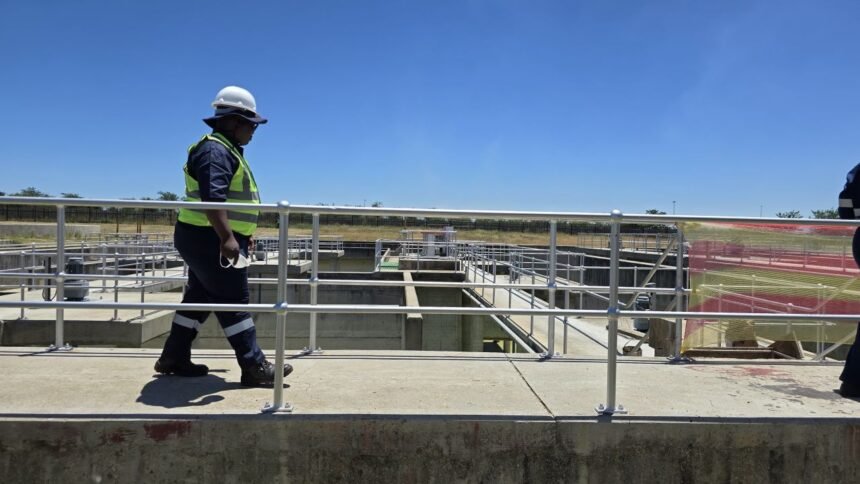
During an oversight visit on 24 January 2026, officials assessed upgrades to critical bulk water and sanitation assets designed to relieve pressure on Matjhabeng’s wastewater network. For years, limited capacity and aging systems have contributed to frequent sewage spills, environmental risks, and deteriorating service quality for communities across Thabong, Kutlwanong and surrounding areas.
The most notable developments are the Thabong and Kutlwanong Wastewater Treatment Works, both of which are more than 90% complete. Dry commissioning was planned for 2025. It will increase the number of operational wastewater plants in the municipality from two to four. This marks a significant step in restoring compliance, improving public health outcomes, and strengthening South Africa Bulk Water Infrastructure resilience at municipal level.
However, the oversight highlighted a persistent risk: power instability. Matjhabeng’s long-standing Eskom debt challenges continue to undermine reliable electricity supply to key treatment assets. Energy insecurity remains one of the most common points of failure for wastewater treatment systems nationwide, and experts note that failure to resolve it could undermine commissioning gains once the plants come online.
In Bronville, officials visited the Bronville South Pump Station, which is already operating at full capacity. Automated pumping systems are helping preserve power, improve operational efficiency and extend equipment lifespan through better control and real-time monitoring. Similar automation upgrades are gaining traction across South Africa Bulk Water Infrastructure projects, aligning the country with international utility digitalisation trends observed in Europe, Canada and the United States.
Beyond infrastructure, capacity remains a fundamental bottleneck. Municipal wastewater systems require technically trained personnel to operate, maintain and troubleshoot increasingly advanced treatment assets. Yet several municipalities, including Matjhabeng, lack a pipeline of skilled operators and certified technicians. Officials warned that without strong recruitment standards and improved oversight, expensive new infrastructure could suffer avoidable failures, while systemic weaknesses remain unaddressed.
“This is not just an infrastructure matter,” one official noted. “If skilled people are not appointed to run these plants, the system cannot stabilise.” The Department has indicated it will explore structural reforms to strengthen municipal recruitment, an approach that mirrors international practice. In places like Ontario and Northern Europe, wastewater treatment roles require professional certification, ensuring operational continuity and protecting critical assets.
The commissioning of the Thabong and Kutlwanong plants will help municipalities achieve multiple strategic goals at once. Increased wastewater capacity reduces untreated effluent discharge, improves environmental compliance, and enhances sanitation service delivery for residents. It also reinforces national ambitions under the Water and Sanitation Master Plan, while improving investor confidence in municipal infrastructure upgrades.
Industry observers see broader implications for the South African market. Across the continent, governments are accelerating wastewater rehabilitation, modern pump system upgrades, and energy-efficient treatment solutions in response to urbanisation, climate pressures, and environmental regulations. International financiers and technology suppliers are closely watching South Africa Bulk Water Infrastructure developments, particularly in automation, SCADA systems, power resilience and workforce training.
For Pumps Africa’s readership, the Matjhabeng case underscores the interconnected nature of pumps, energy, water treatment and public-sector governance. Pump performance depends on power stability. Treatment compliance depends on operational skills. And infrastructure investment depends on the ability to sustain long-term system performance for community benefit.
As commissioning moves forward, residents and sector experts will be watching to see whether capacity gaps and power constraints can be resolved quickly enough to translate infrastructure gains into lasting improvements on the ground. If successful, the upgrades could offer a useful blueprint for similar municipalities navigating the same mix of environmental, financial and operational pressures.