

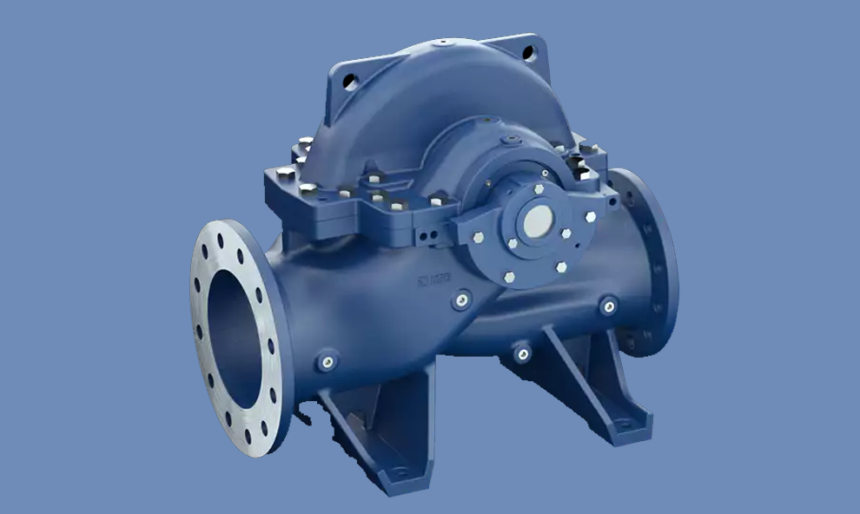
KSB has introduced Omega 2, a new generation of dry-installed axially split casing pumps engineered to boost energy efficiency, streamline maintenance, and deliver robust uptime for critical municipal and industrial infrastructure worldwide. The launch targets engineers, utilities and EPC contractors facing rising lifecycle and availability demands in waterworks, district heating, transport pipelines and circulation systems.
Omega 2 builds on the proven Omega platform deployed in water supply, desalination, pressure boosting and long-distance transport projects across multiple regions. The upgrade continues KSB’s investment in high-efficiency pumping systems for extended operating hours and continuous-duty applications where lifecycle cost and reliability shape procurement decisions.
Higher efficiency for continuous duty
The newest Omega generation refines hydraulic design to reduce energy consumption in large-flow applications. Double-entry radial impellers and reshaped flow passages minimize hydraulic losses, supporting operators under growing pressure to cut power demand and decarbonise operations. With energy prices rising and net-zero targets advancing in utilities and industry, incremental pump efficiency gains translate into measurable reductions in operating cost and emissions across multi-year duty cycles.
Maintenance alignment with predictive strategies
Omega 2 retains the axially split casing architecture that allows horizontal opening without disturbing pipework. Internal access is accelerated through self-centring casing and rotor assemblies, enabling faster inspections and overhaul activities. The maintenance-oriented design aligns with predictive and condition-based strategies now common in major pumping stations and industrial plants, where service windows are tightened to protect uptime.
Reliability for water and heat networks
The Omega platform is built for pressures up to 25 bar and temperatures up to 140 °C, supporting demanding environments from desalination to industrial circulation systems. Omega 2 positions the line for wider use in district heating and cooling, where availability and long service intervals are essential. Material variants offer compatibility with diverse water qualities and process conditions, giving operators flexibility when standardising assets across multiple facilities or geographies.
Flexible deployment and upgrade path
Horizontal or vertical installation options accommodate varied plant layouts, while flange standards support international deployment. The configuration helps utilities and EPC contractors integrate the Omega platform into global projects without bespoke engineering. For operators already running Omega series pumps, the new generation presents a pathway to combine familiar hydraulics with improved energy and service performance during asset renewal cycles.
Relevance for African infrastructure
Continuous-duty pumping is expanding across Africa as water utilities, desalination programmes and industrial users prioritise long-term availability and lower lifecycle cost. District heating and cooling remain emergent segments on the continent, but are advancing in South Africa and selected industrial estates where thermal networks offer efficiency benefits. Omega 2’s focus on uptime, maintainability and energy performance aligns with procurement criteria for modern water and heat assets, particularly in regions seeking to improve resilience against climate-driven water variability and energy constraints.
Applications
- Waterworks and transport pipelines
- Desalination plants
- Industrial circulation systems
- District heating and cooling networks
- Pressure boosting and municipal infrastructure
Specification snapshot
- Pump type: Dry-installed axially split casing
- Impeller: Double-entry radial
- Pressure class: Up to 25 bar
- Temperature range: Up to 140 °C
- Installation: Horizontal or vertical
Water and heat networks are entering an upgrade cycle driven by reliability, decarbonisation and lifecycle economics. Pumping assets operating 24/7 represent a significant share of energy consumption in utilities and industrial plants. Incremental gains in hydraulics, maintainability and uptime can shift long-term cost curves for operators facing constrained budgets, evolving environmental regulations and infrastructure expansion across Africa and other fast-growing regions.