Industrial water treatment monitoring helps improve efficiency, protect equipment and reduce operating costs. Senseca highlights how reliable instrumentation supports process control, water quality management and plant performance.
Monitoring industrial water treatment processes
Industrial water and process monitoring plays a critical role in plant efficiency, product quality, equipment reliability and operational safety. Water quality and process conditions directly influence energy consumption, maintenance requirements and treatment costs.
Continuous monitoring of parameters such as pH, conductivity, turbidity, dissolved oxygen, temperature and chemical concentrations helps operators maintain water quality within specified limits. Early detection of abnormal conditions can also reduce water consumption, chemical usage, energy demand and treatment costs.
Senseca, a global provider of measurement and monitoring solutions, offers instrumentation designed to help industrial operators monitor treatment, cooling, heating, cleaning and manufacturing processes. Access to reliable process data enables plant teams to identify operational risks and make informed decisions.
“Industrial water and process monitoring can transform a plant from a reactive operation into a controlled and predictive operation,” said Jan Grobler, Managing Director of Senseca South Africa.
“Accurate monitoring of industrial water systems addresses four critical questions: Is the process operating correctly? Is the water quality acceptable? Is the equipment being protected? And are we meeting our production, safety, cost and environmental targets?”
Grobler added that Senseca’s measurement instrumentation provides plant management with reliable data to assess operating conditions and improve process performance.
Measurement instrumentation supports plant efficiency
Senseca develops and manufactures instrumentation for flow, level, pressure, temperature and water quality. Its solutions range from local measurement indicators to instruments that integrate with plant control and automation systems.
According to Grobler, site assessments have identified opportunities for industrial facilities to improve process monitoring and operational control.
For example, cooling-water flow monitoring can help detect reduced flow before equipment overheats. Tank-level measurement can warn operators about potential overflows or pumps running dry.
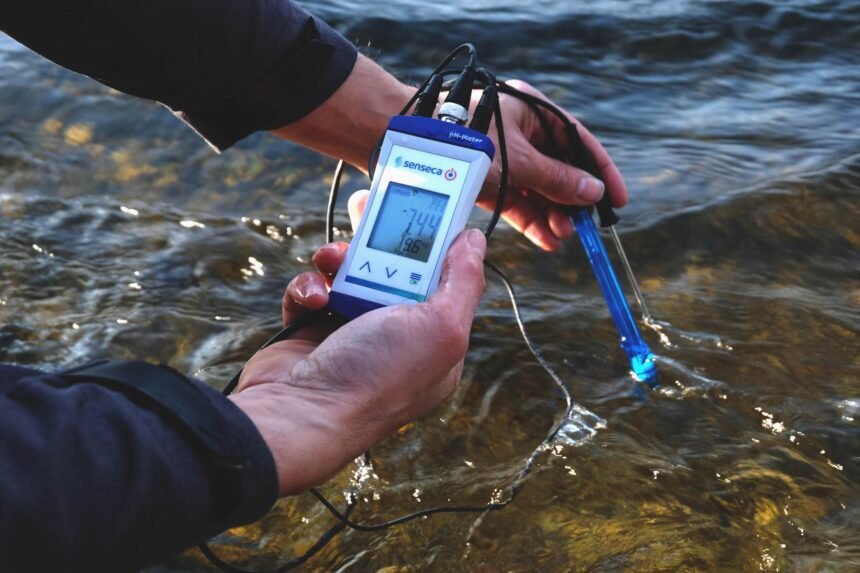
Similarly, pH and conductivity measurements help operators assess water quality and identify changes in treatment or process conditions.
Applying suitable measurement and monitoring instrumentation can improve process visibility and support more effective plant management.
Water analysis and temperature measurement
Senseca’s water-analysis and temperature-measurement instruments help operators monitor conditions that may contribute to corrosion, scaling, deposits and blockages.
These applications are particularly relevant to open and closed cooling circuits, boiler-feedwater systems, reverse-osmosis plants, membrane bioreactor (MBR) wastewater treatment systems, scrubbers, and cleaning and chemical processes.
Accurate measurement makes changes in water quality more visible, supporting maintenance decisions and helping plant teams identify conditions that could reduce heat-transfer efficiency, restrict flow or compromise treatment performance.
Instrumentation can also provide local readings or transmit process values to existing plant systems. Depending on the device and configuration, analogue and digital outputs can support integration with industrial automation infrastructure.
Level and flow monitoring in water treatment
Level- and flow-measurement instruments provide essential information about water movement and operating conditions in tanks, circuits and treatment stages.
Local indicators allow operators to check readings at the measurement point. Where suitable control functions are available, instruments can also support protective actions when levels or flow rates move outside defined operating limits.
In water treatment facilities, effective monitoring supports wastewater management and helps protect tanks, pipes, pumps and associated equipment.
Continuous measurement of key process parameters allows operators to adjust treatment according to actual conditions and demand. This can improve process consistency, support more efficient chemical use and help maintain treatment performance.
“Our compact measurement and control solutions can be integrated into existing plant automation systems, providing reliable alerts when critical process conditions move outside their required parameters,” Grobler said.
Improving industrial performance through reliable data
Industrial water and process monitoring provides plant operators with better visibility of changing operating conditions. Reliable measurement data can support earlier intervention, more informed maintenance planning and improved control of water treatment processes.
Senseca’s instrumentation is designed to help industrial facilities improve operational efficiency, safety and reliability while protecting critical equipment.
“Senseca’s industrial water and process monitoring and measurement instrumentation has a proven track record of helping plants operate more efficiently, safely, reliably and sustainably, while reducing operating costs and protecting critical equipment,” Grobler concluded.