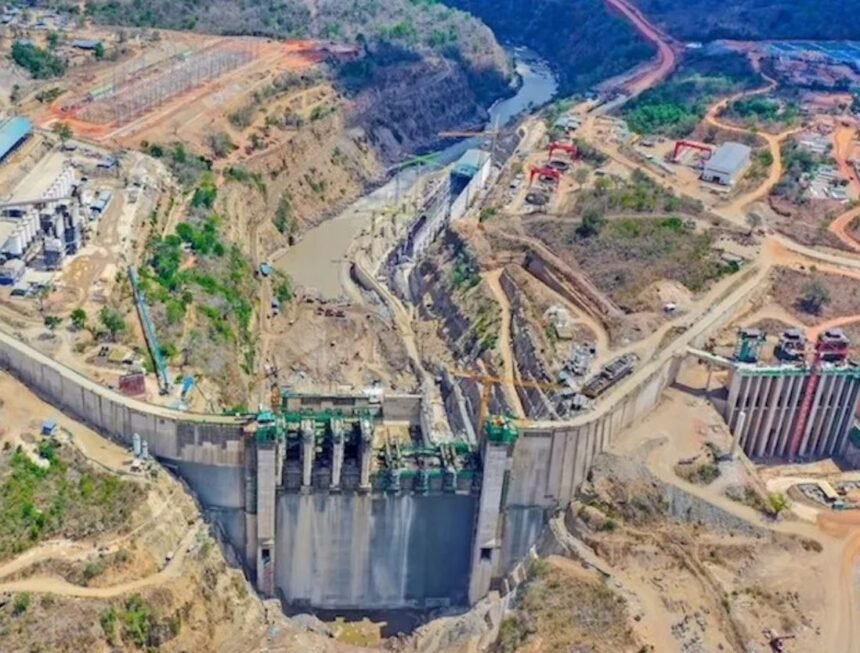
Tanzania has officially launched the 2,115MW Julius Nyerere Hydropower Project, a landmark energy development that significantly expands the country’s electricity generation capacity and strengthens its long-term energy security.
The commissioning ceremony, held on August 22, was led by President Samia Suluhu Hassan and attended by Egyptian Prime Minister Mostafa Madbouly, who represented Egyptian President Abdel Fattah El-Sisi. The event marked the completion of one of Africa’s largest hydropower projects and highlighted growing infrastructure cooperation between Tanzania and Egypt.
Built at a cost of approximately US $2.9Bn, the project was executed by an Egyptian consortium comprising Arab Contractors and Elsewedy Electric. Construction was completed within the agreed 42-month implementation schedule. Located on the Rufiji River in southern Tanzania, the hydropower facility has an installed capacity of 2,115MW generated by nine Francis turbine-generator units, each rated at 235MW. Electricity produced at the plant is transmitted into the national grid through a dedicated 400kV switchyard and associated transmission network.
READ: Egypt eyes ADNOC Drilling partnership to boost oil, gas output
Features and benefits
During the inauguration, the two leaders inspected major components of the project, including the powerhouse, the switchyard and the main dam, before officially unveiling a plaque to commemorate the start of operations. The development is anchored by a roller-compacted concrete dam standing about 131 metres high and stretching more than one kilometre across the Rufiji River.
The structure creates a reservoir capable of holding around 34 billion cubic metres of water. Additional infrastructure includes four auxiliary dams, an emergency spillway, a 660-metre river diversion tunnel, access roads, a bridge across the Rufiji River and various control and monitoring systems. Speaking at the ceremony, Madbouly said the successful delivery of the project demonstrates the ability of Egyptian companies to undertake large-scale infrastructure developments beyond their domestic market, particularly across Africa.
In addition to increasing electricity supply, the project is expected to support water management along the Rufiji River by moderating seasonal flows and reducing flood risks. Authorities also expect the reservoir to provide benefits for agriculture, fisheries and other economic activities that depend on reliable water resources. The Julius Nyerere Hydropower Project was awarded to Arab Contractors and Elsewedy Electric in late 2018 and is expected to play a central role in Tanzania’s efforts to meet rising electricity demand and support industrial development.