

Kirinyaga County’s innovative approach to rural water supply has attracted international attention, with a delegation from the World Bank and Mozambique’s water sector visiting the county to study a technology-driven model that is helping expand access to safe drinking water in underserved communities.
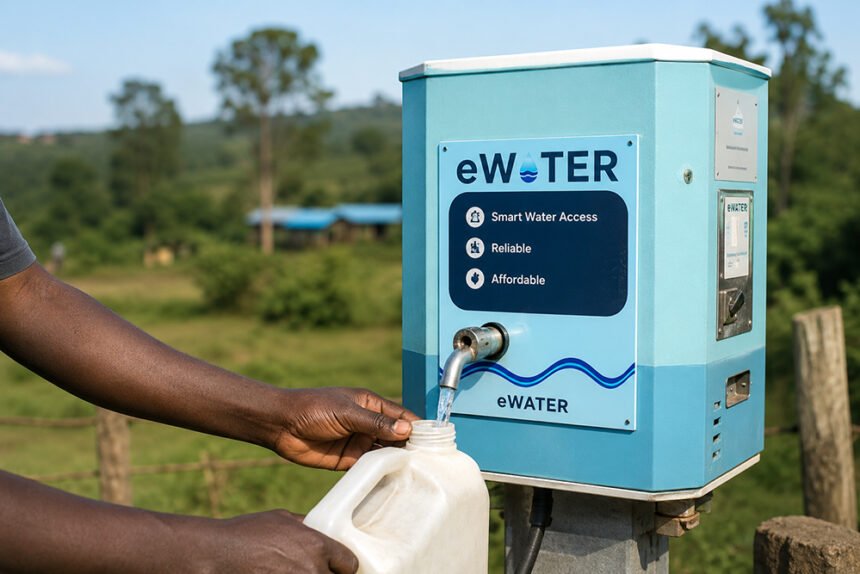
The delegation toured the eWATER project in Gathigiriri Ward, Mwea, where officials examined how the system combines community participation, water conservation measures, affordable pricing and digital technology to improve water distribution in rural areas.
Since 2019, Kirinyaga County has partnered with eWATER to increase access to treated water in areas that previously depended on untreated sources. Under the public-private partnership, eWATER is responsible for designing, financing and installing smart water infrastructure, while the county government provides land, supporting infrastructure and regulatory backing.
READ: Rwanda’s 43.5MW Nyabarongo II Hydropower Project reaches 75% completion
Road to rural water access
During the visit to Kiriko Village, Kirinyaga County Executive Committee Member for Environment Kinyua Mutugi said the project has so far installed 177 community smart water taps, 83 household connections and six institutional connections in Gathigiriri Ward. According to Mutugi, the system now serves approximately 17,000 residents across seven villages, with users paying KSh5 for a 20-litre jerrycan of treated water. He noted that the initiative demonstrates how collaboration between local governments and private operators can help bridge gaps in rural water access.
Kirinyaga Governor Anne Waiguru said the county has allocated KSh200 million (about US $1.55M) annually over the past two financial years to support water infrastructure development, alongside investments made through partnerships. The county is currently implementing 38 water projects and has completed more than 70 projects across different wards. Waiguru added that additional eWATER schemes are underway in Mahigaini, Kirogo, Kamucege and parts of Tebere, where they are expected to provide treated water to around 7,000 more residents.
The Mozambican delegation said Kirinyaga was selected as a case study because of its success in extending water services to rural communities through practical and affordable solutions. Chantul Richey, a World Bank representative based in Mozambique, said the visit forms part of a broader effort to identify models that could be replicated under Mozambique’s rural development programmes. He highlighted Kenya’s reputation for innovative and cost-effective rural water distribution systems.
Caudina Bebane, coordinator of Mozambique’s Agua Segura project, said the delegation was particularly interested in understanding community involvement in water management, tariff structures and the factors that encourage consumers to pay for water services. For local residents, the project has transformed access to safe water. Before the system was introduced, many households relied on irrigation canals that were vulnerable to contamination from agricultural runoff, animal waste and sewage.
Residents now access treated water through a smart payment platform that allows users to top up water tags using mobile money and pay according to consumption. eWATER says its operations across Kenya, Tanzania, Ghana and The Gambia have supplied more than 1.5 billion litres of water to roughly 380,000 people over the last decade. The visit underscores growing interest in technology-enabled water solutions as African countries seek sustainable ways to improve rural water access and strengthen community water services.