

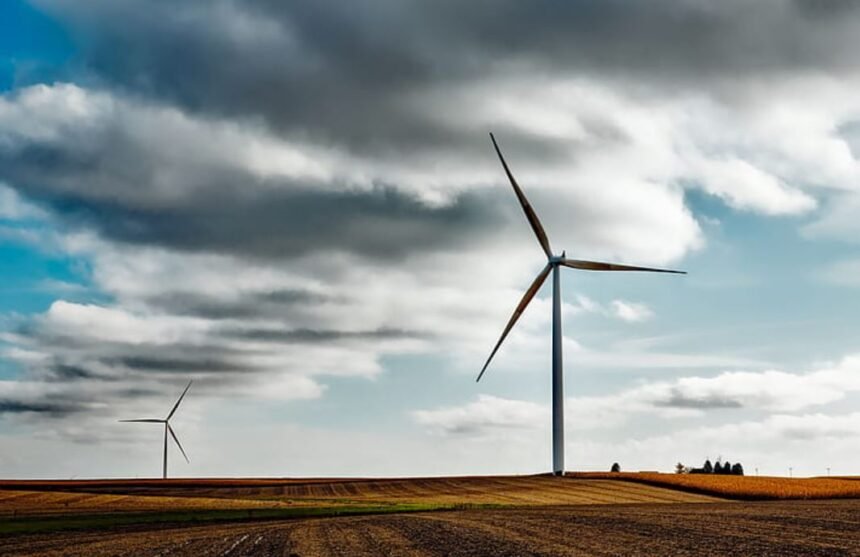
The African Development Bank (AfDB) Group has approved financing of up to $110 million for the development of the 300-megawatt Aysha Wind Project, a landmark renewable energy initiative that will become Ethiopia’s largest wind power facility and its first privately developed wind Independent Power Producer (IPP).
Approved by the Bank’s Board of Directors, the financing forms part of the project’s estimated US $508M investment. The package includes up to $80 million from the African Development Bank, US $20M from the Clean Technology Fund, and US $10M from the Sustainable Energy Fund for Africa. AfDB will also play a key role in mobilising an additional US $381.1M in debt financing from other development finance institutions.
The project will be developed, owned and operated by AMEA Power in Ethiopia’s Somali Region. It involves the construction of a 300 MW greenfield wind farm, a five-kilometre transmission line, and upgrades to the existing Aysha II substation. Under a 25-year power purchase agreement, Ethiopian Electric Power will purchase the electricity generated by the plant and take ownership of the transmission line once completed.
READ: Eni awards contract for Baleine Phase 3 Offshore project
Benefits
When operational, the wind farm is expected to produce around 1,189 gigawatt-hours of renewable electricity each year, helping to strengthen Ethiopia’s electricity supply while reducing its heavy reliance on hydropower, which currently provides the vast majority of the country’s generation capacity. By diversifying the energy mix, the project is expected to improve grid reliability and enhance resilience against climate-related disruptions such as drought.
Commenting on the approval, Wale Shonibare, Director for Energy Financial Solutions, Policy and Regulations at the AfDB Group, said the project demonstrates how governments, development finance institutions and private investors can work together to unlock large-scale renewable energy investments. He noted that the financing structure, developed alongside the International Finance Corporation (IFC), combines long-term debt, concessional funding and innovative risk mitigation measures that could serve as a model for future independent power projects in Ethiopia.
Beyond expanding electricity generation, the project is expected to deliver significant environmental and socio-economic benefits. It is projected to prevent approximately 1.39 million tonnes of carbon dioxide emissions over the duration of the 25-year agreement. During construction, the development is expected to create up to 1,525 direct jobs, while long-term operations will support around 30 permanent positions. In addition, an estimated 35,645 indirect jobs are anticipated through supply chain activities and wider economic growth associated with increased electricity access.
The Aysha Wind Project supports Ethiopia’s National Electrification Program and the country’s target of achieving universal electricity access by 2030. It also contributes to Ethiopia’s climate commitments under its Nationally Determined Contribution (NDC) and long-term net-zero ambitions, while advancing the broader Mission 300 initiative to expand electricity access to 300 million people across Africa by the end of the decade.