

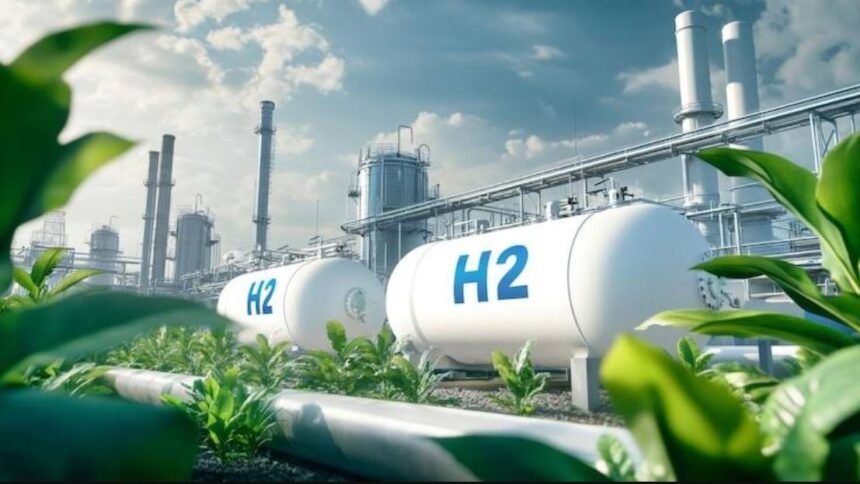
Energy ministers from Algeria, Tunisia, Italy, Austria and Germany have signed a new ministerial declaration to advance the SoutH2 Green Hydrogen Corridor, a major green hydrogen project aimed at linking North African renewable energy resources with European markets.
The Algiers Ministerial Declaration was signed in Algeria’s capital following the second ministerial meeting of the five countries, reaffirming their commitment to developing the cross-border hydrogen corridor and strengthening cooperation on its implementation.
The SoutH2 Corridor is designed to transport up to 4 million tonnes of green hydrogen annually from Algeria to Italy, Austria and Germany through a network stretching about 3,000 kilometres. At full capacity, the project could supply an amount equivalent to roughly 10% of Europe’s projected hydrogen demand by 2040.
The initiative is expected to rely largely on existing natural gas pipeline infrastructure. The pipelines would be progressively upgraded and adapted to safely transport hydrogen, potentially reducing the need to develop an entirely new transmission network and helping lower infrastructure costs.
READ: Egypt launches new oil and gas licensing round for Nile Delta, Mediterranean Blocks
Energy diversity
The project brings together energy producers, infrastructure operators and governments across the Mediterranean and Central Europe. Preparatory work began in October 2024 in Oran, Algeria, when state-owned Sonatrach and Sonelgaz signed a memorandum of understanding with Germany’s VNG, Italy’s Snam and SeaCorridor, and Austria’s VERBUND Green Hydrogen.
The agreement launched feasibility and economic studies for an integrated project covering green hydrogen production in Algeria and its subsequent export to European markets. A first ministerial meeting in Rome in January 2025 produced a declaration of political intent supporting the strategic corridor. The participating countries also agreed to establish a joint five-country working group to coordinate the next stages of development.
For Algeria, the project offers an opportunity to use its strong renewable energy potential and existing energy-export infrastructure to establish itself as a major supplier of low-carbon hydrogen to Europe. For European countries, the corridor could contribute to diversifying energy supplies while supporting efforts to decarbonise industries that are difficult to electrify directly.
The SoutH2 Corridor is part of broader European efforts to establish international hydrogen supply chains as governments seek alternatives to fossil fuels and accelerate the transition toward lower-carbon energy systems.