

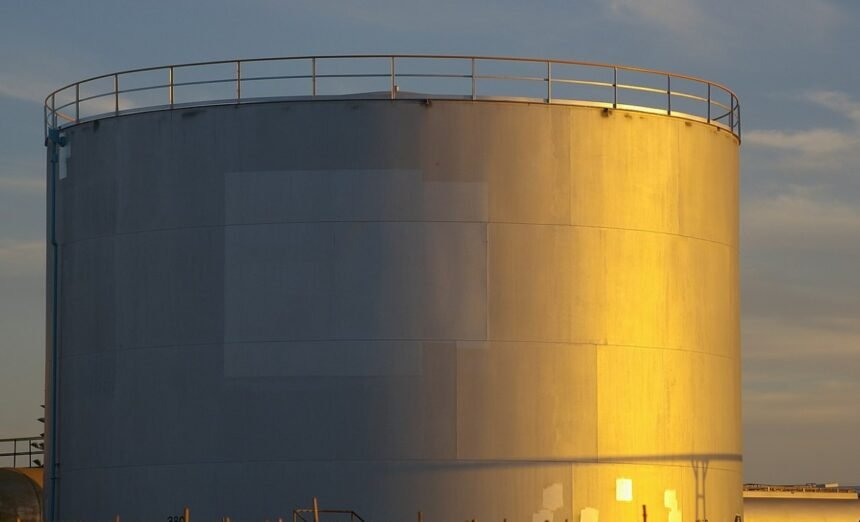
Tanzania has committed US $274M (about TZS 701.8 billion) to construct 15 new oil reception and storage tanks aimed at improving fuel handling capacity and reducing congestion at the country’s busiest seaport, the Port of Dar es Salaam.
The project was officially launched by Samia Suluhu Hassan, who described the investment as a critical step toward addressing long-standing challenges in fuel reception, storage, and distribution. The development forms part of broader government efforts to modernize port infrastructure and strengthen Tanzania’s position as a regional trade and logistics hub.
Construction began in August 2024 and the project is currently about 41 percent complete. Authorities expect the facility to be finished by February 2027. So far, approximately US $45.7M (TZS 117.1 billion) has been paid to the contractor and consulting teams overseeing the development.
READ: Uganda unveils US $400M waste-to-power plant
Benefits
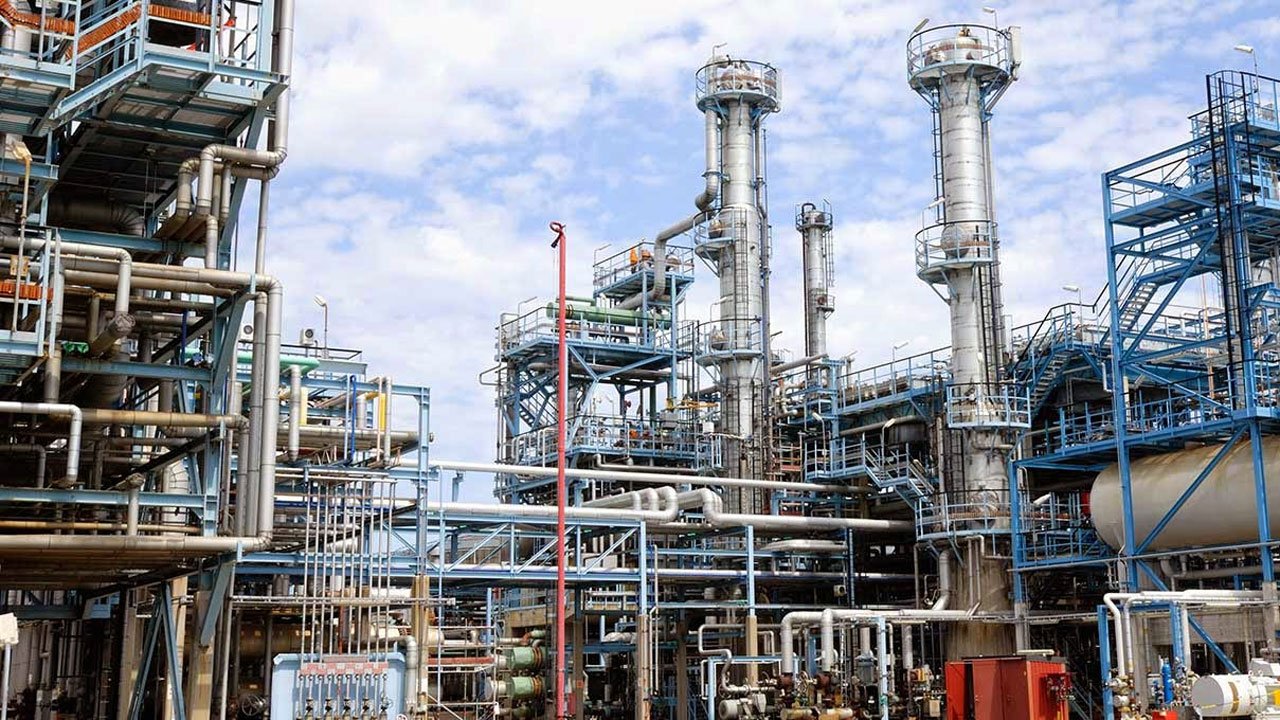
Once completed, the new facility will add 15 tanks with a combined storage capacity of around 378,000 cubic metres. This will include 162,000 cubic metres dedicated to diesel, 135,000 cubic metres for petrol, and 81,000 cubic metres reserved for Jet A1 aviation fuel. Officials say the additional capacity will significantly improve the port’s ability to handle petroleum imports, reduce waiting times for vessels, and ensure a more reliable supply of fuel for households, businesses, and industries across the country.
Currently, oil tankers can wait up to 22 days before discharging their cargo due to limited storage capacity and congestion at the port. With the new infrastructure in place, authorities expect the average waiting time to fall to about seven days. Reducing delays is also expected to cut demurrage charges—fees imposed by shipping companies when vessels remain in port longer than scheduled. These costs can reach around $25,000 per day and are often passed on to fuel importers and ultimately consumers.
Speaking during the launch ceremony, President Hassan noted that reforms in the port sector, including increased private sector participation, have already helped improve operational efficiency, expand cargo handling capacity, and boost government revenue. She also instructed the Ministry of Energy to strengthen the country’s strategic petroleum reserves in order to better protect Tanzania from fluctuations in global oil markets. In addition, the government plans to introduce modern cargo-tracking systems for petroleum shipments to enhance transparency and safeguard public revenue.
Transport Minister Makame Mbarawa said the government is working to integrate port operations with the Tanzania Standard Gauge Railway, which is expected to begin transporting cargo between Dar es Salaam and Dodoma in the near future. To further ease congestion at the seaport, the government is also developing dry ports in several inland locations, including Morogoro, Dodoma, and Shinyanga. These facilities are expected to streamline cargo movement and improve logistics across the country. The storage tank project is being implemented by the Tanzania Ports Authority under the Ministry of Transport as part of the national Port Master Plan, which aims to enhance efficiency, increase competitiveness, and expand the sector’s contribution to the economy.
According to the authority’s director general, Plasduce Mbossa, reducing the time ships spend waiting in port could also help stabilize domestic fuel prices, since demurrage costs are often incorporated into fuel import expenses. Faster ship turnaround times are also expected to attract more vessels to Dar es Salaam, increasing trade volumes and strengthening the port’s role as a key logistics and energy gateway for Tanzania and several neighboring landlocked countries.