

Tunisia has secured approximately US $71M (€61.3 million) in financing from the European Bank for Reconstruction and Development (EBRD), the European Investment Bank (EIB), and the European Union (EU) to support the development of a large-scale solar power plant in the Sidi Bouzid region, marking another milestone in the country’s renewable energy expansion efforts.
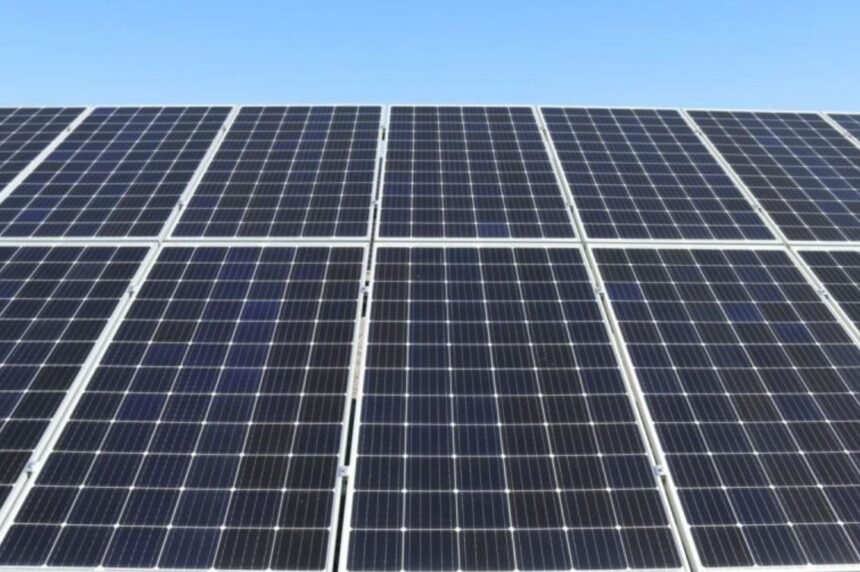
The funding will support the construction of a solar photovoltaic (PV) facility being developed by Scatec Khobna PV Power, a project company established in Tunisia by renewable energy developer Scatec and its partner Aeolus, a subsidiary of Japan’s Toyota Tsusho Group.
Once operational, the project is expected to produce around 252 GWh of clean electricity annually, helping Tunisia strengthen energy security, diversify its power generation mix, and reduce dependence on imported natural gas. The facility is also projected to prevent approximately 107,000 tonnes of carbon dioxide emissions each year throughout its operating life.
READ: Kenya, EU, AFD commission phase II of Green Mini-Grid Programme in Turkana
Financing package
The financing package includes risk-sharing support through the European Fund for Sustainable Development Plus (EFSD+), which is designed to mobilize additional private and public investment in strategic infrastructure projects. In addition, the project will receive approximately US $6.4M (€5.5 million) in EU grant funding to help finance transmission infrastructure connected to the solar plant. The grant forms part of a wider renewable energy support package valued at roughly US $41.5M (€35.8 million) under the EU’s Global Gateway initiative, which aims to accelerate sustainable infrastructure development across partner countries.
The solar project is among the key developments under Tunisia’s 1.7 GW renewable energy concession program launched in 2022. The initiative is intended to help the country achieve its target of sourcing 35% of its electricity from renewable energy by 2030. According to project stakeholders, the investment highlights growing international confidence in Tunisia’s clean energy sector and demonstrates the increasing role of private capital in advancing the country’s energy transition.
Beyond power generation, the project will also include workforce development and community engagement initiatives. Technical assistance funded by the EBRD will support skills development in the Sidi Bouzid and Gabès regions, while awareness programs will focus on gender inclusion, workplace safety, and increasing opportunities for women in the energy sector.
Recent project updates indicate that construction activities have commenced following financial close, with total project costs estimated at approximately US $111M (€96 million). The facility is expected to enter commercial operation during the second half of 2027. Since launching operations in Tunisia in 2012, the EBRD has invested more than US $3.5bn (€3 billion) across 90 projects, while also supporting thousands of local small and medium-sized enterprises through EU-funded technical assistance programs.