

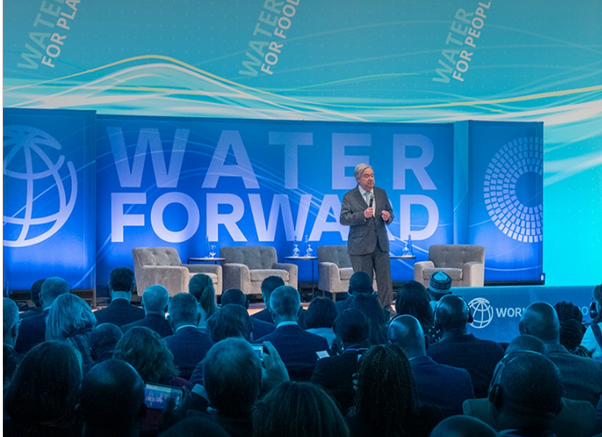
The World Bank Group has launched the Water Forward Initiative, a transformative global platform designed to improve water security for 1 billion people by 2030. For Africa’s pump manufacturers, utility operators, and engineering contractors, the initiative signals a massive pipeline of investment-ready projects across water-stressed regions.
- What is the Water Forward Initiative?
- Priority Interventions for Water-Stressed Africa
- Financing the Water Economy
- Why Water Security Matters for Africa’s Pump Industry
- Increased Demand for Pump Solutions
- Focus on Efficiency and Smart Technology
- Utility Modernization Opportunities
- Africa in Focus
- What This Means for Industry Stakeholders
- Timeline and Next Steps
- Call to Action
Announced on April 15, 2026, the initiative aligns country-led reforms, financing, and multilateral partnerships to scale reliable water services. The move comes as an estimated 4 billion people experience severe water scarcity, with climate change intensifying both droughts and floods across Africa.
“Water is foundational to how economies function,” said World Bank Group President Ajay Banga. “When water systems work, farmers produce, businesses operate, and cities attract investment. Our task now is to align reform, financing, and partnerships to deliver reliable water services at scale.”
What is the Water Forward Initiative?
The Water Forward Initiative is not merely about expanding access—it represents a systems-level shift in how water infrastructure is financed, managed, and operated. The program brings together multilateral development banks, governments, private investors, and philanthropic organizations to accelerate investment in water services.
At its core are country-led water compacts—binding agreements where governments define reform priorities, commit to strengthening institutions, and establish bankable investment pathways for their water sectors. Today, 14 countries announced their national water compacts, with a specific focus on water-stressed regions including Africa, the Middle East, and South Asia. Many more countries are in the process of developing their compacts.
Priority Interventions for Water-Stressed Africa
For the African continent—where over 2.1 billion people lack safe drinking water and more than 3.4 billion live without adequate sanitation—the initiative offers a strategic lifeline. Water Forward will prioritize projects that:
- Reduce leakage in urban areas, addressing non-revenue water
- Modernize irrigation systems for climate-resilient agriculture
- Improve wastewater reuse and recycling technologies
- Expand data-driven water resource planning and smart monitoring
- Strengthen water utilities financially and operationally
These interventions are designed to unlock economic productivity, support livelihoods, and create an enabling environment for private investment—a critical shift for African utilities that have long struggled with weak policies, unclear regulations, and financial unsustainability.
Financing the Water Economy
A defining feature of Water Forward is its push to reframe water as an economic asset rather than a subsidized public service. The program aims to mobilize blended finance—combining public funding with private capital—to scale investments in water infrastructure.
The World Bank Group has committed to delivering water security to 400 million people by 2030 directly through its own financing. With additional commitments from a coalition of multilateral development banks, Water Forward expects to reach more than 1 billion people within four years.
Key partners with specific beneficiary targets for 2030 include the Asian Development Bank, European Investment Bank, Islamic Development Bank, New Development Bank, Inter-American Development Bank, and the OPEC Fund for International Development, among others.
Global demand for freshwater is projected to outstrip supply by up to 40% by the end of the decade, according to World Bank estimates. Water-related shocks already cost some countries several percentage points of annual economic growth.
Why Water Security Matters for Africa’s Pump Industry
For Africa’s water sector—and the pump industry in particular—the implications are significant. Water underpins health systems, agriculture, energy production, and industrial operations, supporting an estimated 1.7 billion jobs globally. With more than 1.2 billion young people expected to enter the workforce in developing countries over the next 10 to 15 years, reliable water is critical for job creation and economic stability.
Increased Demand for Pump Solutions
The initiative will drive procurement across multiple pumping categories, including bulk water transfer systems for inter-basin conveyance, wastewater and reuse pumping technologies for treatment plants, irrigation and agricultural pumping systems for modernized schemes, booster stations for urban distribution networks, and dewatering pumps for flood resilience projects.
Focus on Efficiency and Smart Technology
Project financing will increasingly require energy-efficient pumps to reduce operational expenditure, smart monitoring and predictive maintenance systems, leakage reduction technologies, variable frequency drives and pressure management solutions, and digital water management platforms integrated with pumping assets.
Utility Modernization Opportunities
Water Forward explicitly targets strengthening of financially unsustainable utilities. This translates into retrofitting and upgrading aging infrastructure, implementing pressure management to reduce burst rates, deploying remote monitoring and SCADA systems, and training local operators on best practices for pump maintenance.
Africa in Focus
Sub-Saharan Africa, where rapid urbanization is placing pressure on aging systems, will be a primary beneficiary. The initiative is expected to catalyze investment in non-revenue water reduction—often exceeding 40% in many African cities—expansion of piped water networks to underserved peri-urban and rural areas, climate-resilient infrastructure upgrades including solar-powered pumping systems, and wastewater treatment and reuse projects, particularly in water-scarce regions like the Sahel and Horn of Africa.
For utilities across East, West, and Southern Africa, Water Forward could unlock financing and technical support that has historically been difficult to access.
What This Means for Industry Stakeholders
For pump manufacturers and distributors, the initiative signals increased tenders for high-efficiency, digitally enabled pumping systems, requiring alignment with global standards on energy efficiency and lifecycle costing.
For EPC contractors, aligning with international financiers and multilateral banks will be essential, as Water Forward projects will demand proven execution capacity and local partnerships.
For utility operators, preparing for modernization programs by investing in training, asset management systems, and leakage reduction strategies will be key to becoming creditworthy.
For irrigation specialists, modernized schemes will demand reliable pumping solutions—from solar-powered systems to high-lift pumps for pressurized networks.
For local assemblers and service providers, there is significant opportunity to provide maintenance, retrofitting, and after-sales support for new installations across compact countries.
Timeline and Next Steps
The Water Forward Initiative sets clear goals: immediate rollout across 14 priority countries, with first compacts moving into implementation phase within 12 months. The World Bank aims to benefit 400 million people directly by 2030, with broader partnerships extending improved water security to more than 1 billion people.
Call to Action
Industry stakeholders across Africa should monitor procurement portals for tenders from World Bank-funded projects in compact countries, engage with local utilities to understand modernization needs, upgrade technology offerings to include energy-efficient and smart pumping solutions, build partnerships with international EPC firms and development financiers, and align with global standards including ISO, IEC, and World Bank environmental and social safeguards.
The next wave of water projects is coming—and the Water Forward Initiative is leading it. For Africa’s pump industry, this is a defining moment to demonstrate reliability, efficiency, and innovation at scale.