

The Nigeria-Morocco gas pipeline project is set to advance to key stage. Amina Benkhadra, head of Office National des Hydrocarbures et des Mines (ONHYM) made the announcement and said an intergovernmental agreement (IGA) is set to be signed before the end of the year.
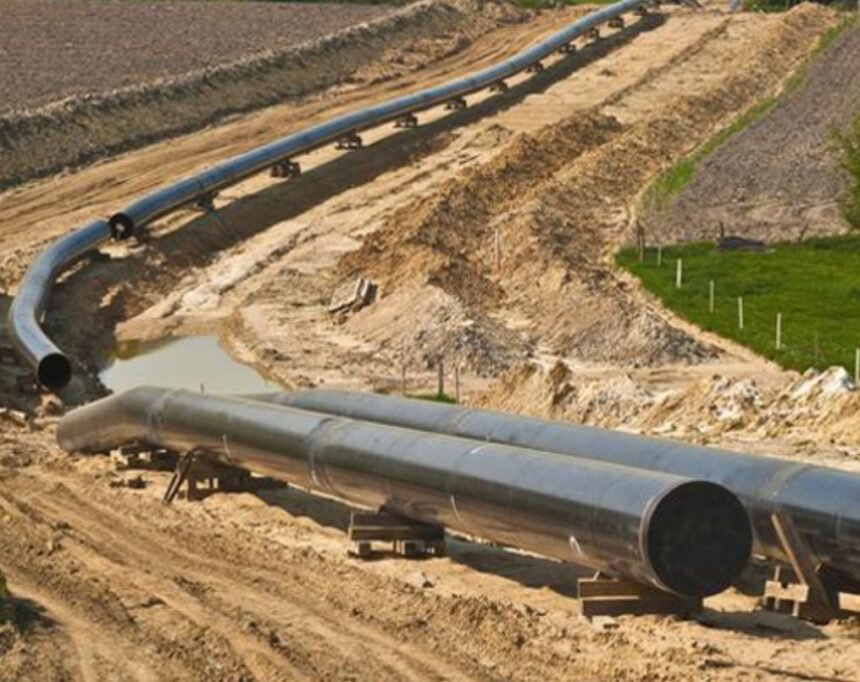
The US $25bn project known as the African Atlantic Gas Pipeline—was first proposed roughly ten years ago and is expected to stretch about 6,900 kilometres along a mix of offshore and onshore routes. It is designed to transport up to 30 billion cubic metres (bcm) of gas annually, with approximately half of that volume intended for Morocco’s domestic market and exports to Europe.
READ: Royal Power & Energy awarded contract to expand renewable mini-grids in Nigeria
Benefits
Backed by the Economic Community of West African States, the pipeline has already passed key technical milestones, including feasibility assessments and front-end engineering design (FEED) studies. Following the signing of the IGA, a coordinating authority will be created in Nigeria, bringing together ministerial representatives from the 13 participating countries to oversee governance and regulatory alignment. At the same time, a joint venture between ONHYM and the Nigerian National Petroleum Company will establish a project company in Morocco to lead financing, construction, and implementation.
The pipeline is expected to play a major role in strengthening regional integration by supporting electricity generation and enabling industrial and mining growth across West Africa. It also aligns with Morocco’s strategy to position itself as a key energy link between Africa and European markets.
Development will take place in stages. Early phases will focus on connecting Morocco to gas reserves in Mauritania and Senegal, as well as linking Ghana with Côte d’Ivoire. A later phase will extend the network to Nigeria’s gas fields. First gas from the initial segments is projected around 2031. Benkhadra noted that the project will be executed in modular phases, allowing individual sections to move forward independently and generate early returns rather than waiting for a single final investment decision.
Although financing has yet to be finalised, the project company is expected to structure funding through a blend of equity and debt. Interest from potential investors remains strong, reflecting the project’s scale, phased approach, and strategic importance in regional and global energy supply chains.