


The African Development Bank (AfDB), working alongside UNICEF, has unveiled a US $54.8M emergency initiative to restore water and sanitation services in Sudan, delivering critical relief to hundreds of thousands of people displaced by the country’s ongoing conflict.
Funded through the African Development Fund (ADF), the programme will rehabilitate damaged water infrastructure in Port Sudan—the country’s main humanitarian and administrative centre since conflict erupted in 2023 and expand access to safe drinking water and sanitation for communities struggling with mounting humanitarian pressures.
The investment is expected to provide clean drinking water to approximately 750,000 people, including nearly 600,000 residents of Port Sudan, where more than one in three people are internally displaced. In addition, improved sanitation facilities will benefit an estimated 200,000 people, while communities in North and South Kordofan will also receive support through the project.
The initiative represents one of the largest recent investments in Sudan’s water, sanitation and hygiene (WASH) sector. It comes at a time when conflict, mass displacement and climate-related challenges have severely weakened essential public services, leaving millions exposed to disease, food insecurity and worsening living conditions.
READ: Wison New Energies secures EPCIC deal for Baleine Phase 3 FPSO development offshore Côte d’Ivoire
A city under pressure
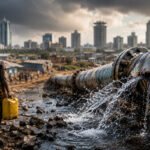
Since violence broke out in 2023, Port Sudan has become the country’s primary hub for humanitarian operations and government activities. The arrival of thousands of displaced families has placed unprecedented pressure on public infrastructure that was already struggling to meet demand. Current water systems supply less than 40% of the city’s daily needs, according to project partners, creating widespread shortages for both host communities and displaced populations.
Limited access to clean water has heightened the risk of cholera, acute watery diarrhoea and other preventable diseases, particularly among children living in overcrowded conditions where sanitation services have deteriorated. UNICEF warns that children bear the greatest burden when water systems fail. Beyond the immediate threat of illness, inadequate water and sanitation contribute to school absenteeism, poor nutrition and increased protection risks for vulnerable families.
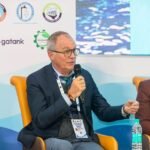
“Children in Sudan are paying the highest price of this crisis,” said Sheldon Yett. “When water systems fail, children are the first to suffer from disease, from missed school, and from heightened protection risks. Together with the African Development Bank Group and partners, we are restoring life-saving services and helping communities cope with the scale of this emergency.”
Rebuilding essential services
UNICEF will oversee implementation of the programme, focusing on restoring and strengthening critical water infrastructure while improving long-term service delivery. Planned activities include rehabilitating damaged water sources, repairing pipelines and distribution networks, expanding sanitation facilities and promoting safe hygiene practices. The programme will also strengthen the operational capacity of local water authorities to ensure vulnerable communities, particularly displaced families and children, continue receiving reliable access to safe water and sanitation.
Beyond emergency repairs, the project is designed with long-term resilience in mind. New and rehabilitated infrastructure will incorporate climate-resilient features to better withstand Sudan’s increasingly frequent droughts, flooding, erratic rainfall and rising temperatures—environmental pressures that continue to intensify the country’s humanitarian challenges.
“This project responds to an urgent and growing need,” said David Muthusi Mutuku. “By combining immediate action with longer-term investments, we are providing climate-resilient, sustainable solutions to help ensure that communities under pressure can access safe, reliable water.”
The initiative reflects a broader shift in international development financing, where emergency humanitarian assistance is increasingly combined with investments that strengthen long-term resilience. Rather than focusing solely on immediate relief, development institutions are placing greater emphasis on rebuilding infrastructure capable of supporting recovery while reducing vulnerability to future conflicts and climate shocks. According to the World Health Organization, access to safe water and adequate sanitation remains one of the most effective public health interventions, significantly reducing infectious diseases while improving school attendance, nutrition and economic productivity.
For Sudan, rebuilding the water sector is particularly urgent. Years of conflict have damaged infrastructure, disrupted maintenance programmes and weakened institutional capacity, while large-scale displacement has dramatically increased demand in relatively stable urban centres such as Port Sudan. Expanding water and sanitation services is therefore expected not only to improve living conditions for displaced families but also to ease pressure on host communities that have absorbed growing populations throughout the conflict. The project also supports the African Development Bank’s High 5 development priorities, particularly its commitment to improving quality of life through investments in infrastructure, climate resilience and human development.
The partnership between the African Development Bank and UNICEF highlights the growing importance of collaboration between multilateral development institutions and United Nations agencies in responding to complex emergencies where humanitarian and development needs overlap. By combining financial resources, technical expertise and operational capacity, such partnerships can deliver immediate relief while creating stronger foundations for long-term recovery.
For Sudan, restoring water and sanitation services represents more than rebuilding damaged infrastructure. It is an investment in public health, social stability, education and economic recovery. As conflict, climate change and rapid urbanisation continue to challenge public services across Africa, initiatives that strengthen essential infrastructure are expected to play an increasingly central role in the continent’s development agenda. The latest AfDB–UNICEF programme demonstrates how coordinated financing and climate-smart investment can help meet urgent humanitarian needs while supporting more resilient communities for the future.