

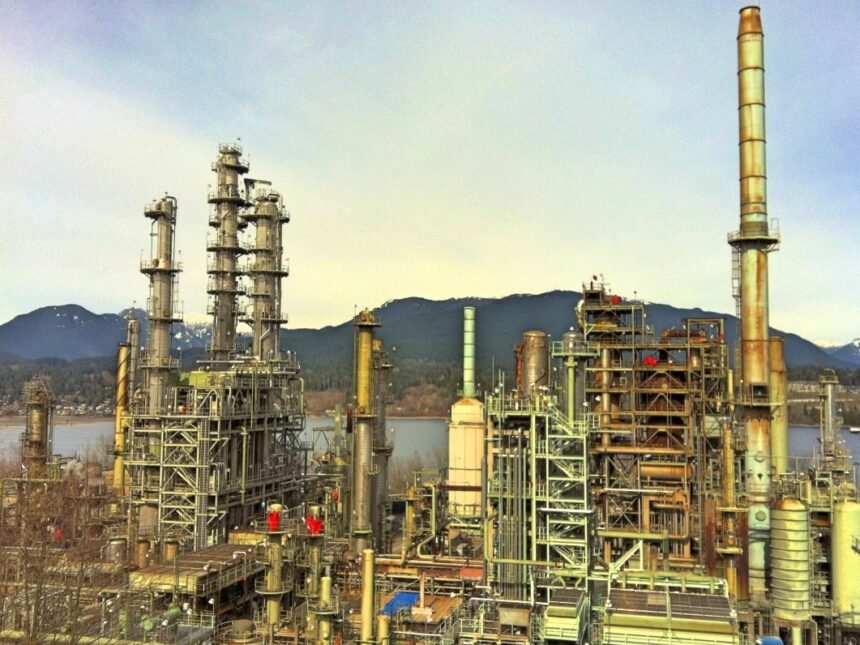
Angola has officially begun commercial fuel supply operations from the new Cabinda Oil Refinery, marking a major milestone in the country’s efforts to reduce its long-standing dependence on imported refined petroleum products and strengthen domestic energy security.
Located in Cabinda Province, the refinery is the first to be built in Angola since the country gained independence from Portugal nearly 50 years ago. The facility has now entered commercial operations after an extended commissioning and testing phase, supplying diesel to the domestic market while exporting naphtha and heavy fuel oil to international buyers.
READ: Morocco, Norway partner on 2 GW renewable energy programme
Cabinda Oil Refinery
The project, developed at a cost of more than US $470M, is majority-owned by investment firm Gemcorp Capital, which holds a 90% stake. Angola’s state oil company Sonangol retains participation in the project. The Cabinda refinery currently has a processing capacity of 30,000 barrels per day (bpd), enough to meet roughly 10% of Angola’s fuel demand. Prior to its launch, Angola relied heavily on fuel imports despite being one of Africa’s largest crude oil producers. According to Sonangol, the country imports approximately 72% of its fuel requirements, equivalent to about 3.3 million metric tons annually.
Gemcorp founder and chief executive Atanas Bostandjiev said the refinery was originally conceived as an energy security project for Angola, a strategy that has gained greater relevance amid geopolitical tensions and supply concerns linked to the ongoing Middle East crisis. The refinery’s startup comes at a time when African oil-producing nations are increasingly investing in domestic refining infrastructure to capture more value from crude exports, improve supply resilience, and reduce exposure to international fuel price volatility.
Angola previously operated only one refinery, the Luanda refinery, which is run by Sonangol. The country is also advancing additional downstream projects, including a planned 200,000-bpd refinery in Lobito and a proposed 100,000-bpd facility in Soyo, although the latter is currently under review following difficulties involving its private developer, Quanten Consortium.
Gemcorp is now evaluating a second expansion phase for the Cabinda refinery that would double capacity to 60,000 bpd and introduce hydrocracking technology to boost production of diesel and jet fuel. The proposed expansion is expected to cost about $700 million, with a final investment decision targeted before the end of the year.
The development reflects a broader trend across Africa, where governments are seeking to reduce reliance on imported fuels. Major projects such as Dangote Petroleum Refinery and Petrochemicals in Nigeria are reshaping the continent’s downstream landscape as producers aim to improve refining self-sufficiency and strengthen regional fuel supply chains.