

Aliko Dangote, Africa’s richest man and chairman of the Dangote Group, has shifted his preferred location for a proposed 650,000-barrel-per-day oil refinery from Tanzania’s Tanga port to Kenya’s Mombasa – though he has stopped short of a final official commitment.
In an interview with the Financial Times, Dangote made his preference clear. “I’m leaning more towards Mombasa because Mombasa has a much larger, deeper port,” he said, adding that “Kenyans consume more. It’s a bigger economy.”
But the Nigerian billionaire placed the final decision squarely on the Kenyan government. “The ball is in the hands of President Ruto. Whatever President Ruto says is what I’ll do,” Dangote stated.
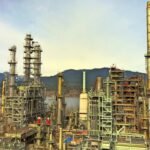
The proposed refinery, estimated to cost between 15billionand17 billion, would be one of East Africa’s largest industrial infrastructure investments. Its 650,000 barrels-per-day capacity matches the landmark Dangote Refinery in Lagos, Nigeria – the world’s largest single-train facility, which began reshaping West Africa’s fuel supply chain in 2024.
A diplomatic stumble in Tanga
The pivot to Mombasa follows an unusual public diplomatic rift between Nairobi and Dar es Salaam.
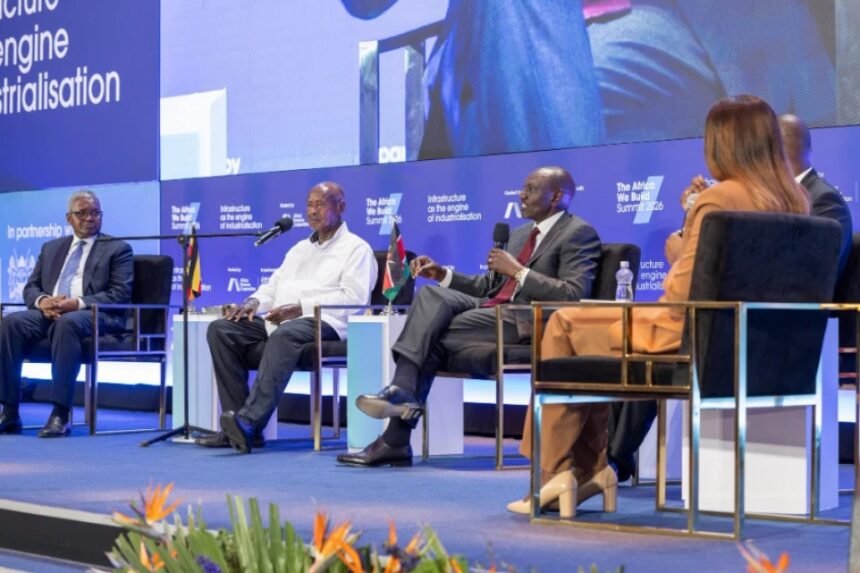
Just weeks ago, Kenyan President William Ruto announced a joint regional refinery in Tanga, Tanzania, during the Africa Infrastructure Summit hosted by the Africa Finance Corporation in Nairobi. Ruto presented the project as a regional initiative to serve Tanzania, Kenya, Uganda, and South Sudan.
However, Tanzanian President Samia Suluhu Hassan publicly revealed she had not been consulted. At a joint press conference during Ruto’s state visit to Dar es Salaam, Suluhu disclosed: “While we were speaking inside, I pressed Ruto and asked him, ‘You went ahead and announced a refinery in Tanga, which I wasn’t aware of?’ He will explain himself why he made that announcement.”
Ruto later conceded, telling reporters: “If I knew, I would have announced that a refinery would be built in Mombasa.”
It was against this backdrop of diplomatic discomfort that Dangote gave his FT interview, shifting his expressed preference to Kenya.
What Dangote’s preference means for infrastructure
For the pumps, pipelines, and fluid handling sectors, the implications are substantial.
A refinery of this scale requires an intricate network of:
- Crude supply pipelines – Likely connecting Mombasa to inland crude sources in Uganda and South Sudan
- Product distribution pipelines – Transporting refined fuel to regional markets
- Storage and pumping stations – Across the Mombasa corridor and into the hinterland
- Maritime infrastructure – Tanker offloading facilities at the port
Mombasa’s existing deepwater port gives it an immediate advantage over Tanga. Dangote explicitly cited this: “Mombasa has a much larger, deeper port” – a critical factor for receiving crude oil shipments and exporting refined products.
The regional integration question
Industry observers view the episode as a critical test of East Africa’s ability to execute shared energy infrastructure.
The region currently spends tens of billions of dollars annually importing refined petroleum from the Middle East and Asia, while Uganda and South Sudan export crude oil in raw form. A single 650,000 bpd refinery could flip this equation – but only if governments coordinate.
Past attempts at regional refinery strategies have failed due to disagreements over crude-supply quotas, refining tariffs, and equity stakes.
“The Tanga proposal fell apart not on economics, but on who was informed and who was not,” said a Nairobi-based energy analyst. “If the Mombasa project is to succeed, it must be built as a truly regional asset – not a Kenyan national trophy.”
What happens next
Dangote has publicly placed the ball in President Ruto’s court. Practical next steps should Kenya pursue the project include:
- Policy guarantees – Tax incentives, land allocation, and regulatory fast-tracking
- Crude supply agreements – Commitments from Uganda and South Sudan to supply feedstock
- Pipeline negotiations – Arrangements for transporting crude to Mombasa and products inland
- Regional offtake commitments – Guarantees from neighboring countries to purchase refined products
However, Dangote left the door open for Tanzania. He noted the refinery could still be built in Tanga “if they are able to sort themselves out” – a direct reference to the diplomatic tensions. This suggests the industrialist is inviting a competitive response from both capitals.
A test of trust
The Dangote Group has proven it can deliver mega-refineries. The Lagos facility stands as evidence. The question for East Africa is no longer about engineering capability – it is about political trust.
Will Kenya, Tanzania, Uganda, and South Sudan agree to share the benefits and burdens of a regional energy asset? Or will national interests fracture the project into smaller, less efficient schemes?
Dangote has signalled his commercial preference. The infrastructure gap is clear. The economic case is compelling.
The only missing ingredient is regional coordination.
If President Ruto secures the refinery and builds it with Tanzania, Uganda, and South Sudan as genuine partners, it would mark a turning point for East African industrialisation. If not, the region will remain what it has always been: a net importer of fuel, a net exporter of raw crude, and a net loser of value.
At a glance
| Project parameter | Detail |
|---|---|
| Proposed capacity | 650,000 barrels per day |
| Estimated cost | $15–17 billion |
| Preferred location | Mombasa, Kenya |
| Alternative location | Tanga, Tanzania |
| Final decision maker | President William Ruto |
| Current status | Expressed preference – no signed agreement |
| Construction timeline | 4–5 years (conditional) |