

Water reuse adoption is emerging as a critical strategy in global water security, and a new call from Veolia is putting pressure on governments, industries, and utilities to act decisively.
- Water security enters a strategic phase
- Why water reuse adoption is still low
- A new economic model for water reuse
- From linear systems to circular water economies
- Ten proposed actions to accelerate adoption
- 1. Integrated water security planning
- 2. Economic visibility of water scarcity
- 3. Global governance reform
- Real-world water reuse adoption is already working
- Technology in action: ReutBox systems
- Industry implications for Africa and emerging markets
- Critical timing
- A turning point for global water systems
The company warns that water systems are under severe strain. Demand is rising faster than supply in many regions, and climate change is accelerating the gap. Veolia says reuse technologies must move from optional to essential infrastructure.
The announcement follows the release of a white paper developed with its newly created Stakeholders Assembly. The group includes 34 international actors from economics, insurance, industry, and public policy. Their shared message is clear: water reuse adoption must scale faster to avoid systemic water risk.
Water security enters a strategic phase
Water security is no longer only an environmental issue. It is now tied to competitiveness, sovereignty, and public health.
Veolia notes that global freshwater demand may exceed supply by up to 40% by 2030, according to the Global Commission on the Economics of Water (2023 report). The United Nations has also warned of worsening global water stress, describing an era of “global water bankruptcy.”
Experts say this shift demands immediate attention. Industries are already feeling pressure, with manufacturing hubs facing higher costs and reduced reliability, while municipal systems struggle to maintain stable supply.
“Water has become a matter of strategic concern,” said Anne Le Guennec, CEO of the Water Technologies Zone at Veolia. “We must stop thinking of water as linear; instead we should treat it as a renewable resource so industries and local authorities can call on a mix of freshwater and recycled water to meet their critical needs.”
Why water reuse adoption is still low
Despite available technology, global water reuse adoption remains limited. Currently, only about 8% of the world’s wastewater is reused.
Barriers include:
- Regulatory uncertainty
- Public perception and psychological resistance
- Financial risk concerns
- Lack of infrastructure incentives
Veolia argues that these barriers are not technological. They are structural and economic. The company’s white paper sets out ten concrete proposals and commitments designed to dismantle these obstacles.
A new economic model for water reuse
One of the strongest proposals in the white paper is financial reform. Veolia and its partners propose an open-source tool to calculate the projected “cost of no water.”
Expected by the end of 2026, the tool aims to help governments and investors understand water risk in economic terms, making the risk more tangible for public and financial decision-makers.
Key contributors include:
- Esther Crauser-Delbourg (water economist)
- Susan Doering from Aon Insurance
- Laurie Chesné from Natixis CIB
“Climate breakdown has shuffled the deck when it comes to water. We need to rethink our habits to make sure we’re using water at the right time, in the right place, and in the right way,” said Crauser-Delbourg. “The solutions already exist for recycling and preserving water resources. What we now need are robust financial and economic tools, particularly tariffs that properly reflect water’s value. Now is the time to take action collectively.”
From linear systems to circular water economies
Veolia is pushing a fundamental shift in how water systems are designed. Traditional models treat water as linear—used once and discharged. Water reuse adoption introduces circular thinking, where wastewater becomes a resource.
Anne Le Guennec emphasized that combining freshwater and recycled sources creates a hybrid model that improves resilience during shortages and reduces pressure on natural water systems.
Ten proposed actions to accelerate adoption
The white paper outlines ten priority measures to accelerate water reuse adoption. Three key proposals stand out:
1. Integrated water security planning
Countries should map demand, risk, and reuse potential together to ensure better allocation of resources. This approach accounts for stakeholders’ needs as well as local constraints and challenges to define an optimal supply mix aligned with regional strategies.
2. Economic visibility of water scarcity
Decision-makers need tools that quantify the cost of water absence. The open-source “cost of no water” tool will support smarter investment planning and infrastructure prioritization.
3. Global governance reform
The assembly is calling for a regular United Nations Water Conference, similar to existing conferences on biodiversity and climate. This would keep water reuse adoption on the international agenda and promote reuse as a core component of global water policy.
Real-world water reuse adoption is already working
Water reuse is not theoretical. It is already deployed at scale in several regions, including Chile, Spain, Namibia, and Middle Eastern states.
Veolia has led many of these projects for over 25 years, working with customers worldwide to roll out tailored solutions that boost environmental security—from tackling network leaks to wastewater reuse and desalination implemented after all other options have been considered.
Technology in action: ReutBox systems
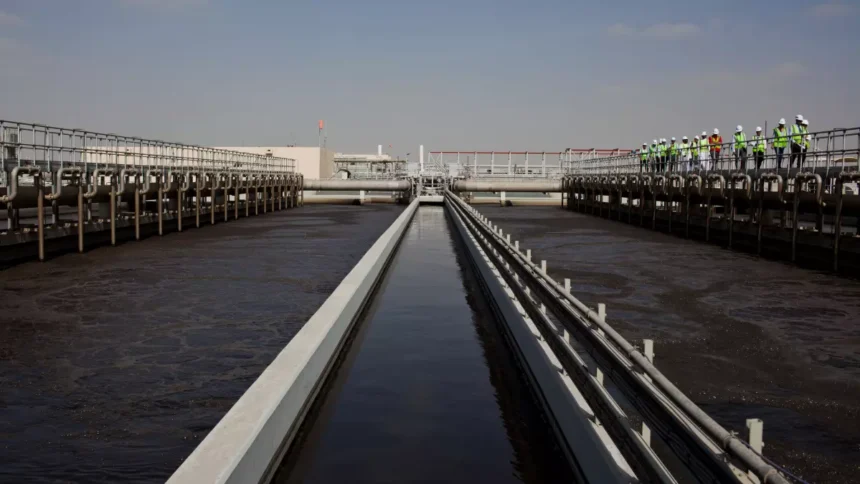
A key innovation driving water reuse adoption is Veolia’s ReutBox system. These compact, mobile treatment units allow sewage plants to operate in a closed loop, providing quality recycled water for local external uses.
Applications include:
- Irrigation
- Street cleaning
- Watering green spaces
In France, over 50 installations are planned or active. In the southern city of Narbonne, a cutting-edge installation provides treated wastewater for irrigating vineyards. In nearby Argelès, the country’s largest water reuse installation will soon supply water for local crop irrigation.
These examples show practical water reuse adoption at scale, demonstrating that proven state-of-the-art technologies are ready for broader deployment.
Industry implications for Africa and emerging markets
Water reuse adoption is especially relevant for Africa. Rapid urban growth is increasing demand, while climate variability is reducing reliability. Utilities face pressure to reduce non-revenue water, and industrial zones need stable supply for production continuity.
For African nations, reuse systems could:
- Reduce drought vulnerability
- Lower infrastructure strain
- Improve agricultural resilience
- Support industrial expansion without competing for scarce freshwater
This aligns with broader continental goals for water resilience and sustainable development.
Critical timing
The timing of this shift is critical. With demand for freshwater forecast to outstrip supply by 40% by 2030, water systems are nearing structural limits. Delays in adoption increase long-term costs for economies and communities.
Veolia warns that prevention alone is not enough. Technology must be deployed at scale, and economic frameworks must evolve alongside infrastructure. Without action, water insecurity could affect global stability, hitting emerging markets hardest.
A turning point for global water systems
Water reuse adoption is moving from niche to necessity. Veolia’s white paper signals a global policy shift, combining technology, finance, and governance reform as the central pillars of future water security.
The next decade will determine whether reuse becomes mainstream or remains underutilized. The direction is now in the hands of governments, industries, and utilities across Africa and the world.
About Veolia
Veolia is a global leader in environmental services, operating across five continents with 215,000 employees. In 2025, the group provided drinking water to 110 million people and sanitation to 97 million, produced 45 million megawatt hours of energy, and treated 64 million tons of waste. Veolia Environnement (Paris Euronext: VIE) generated consolidated revenue of €44.4 billion in 2025.