

Nigeria’s Dangote Group is exploring major oil pipeline and storage projects across Southern and Central Africa as it seeks to expand the regional footprint of its refining business.
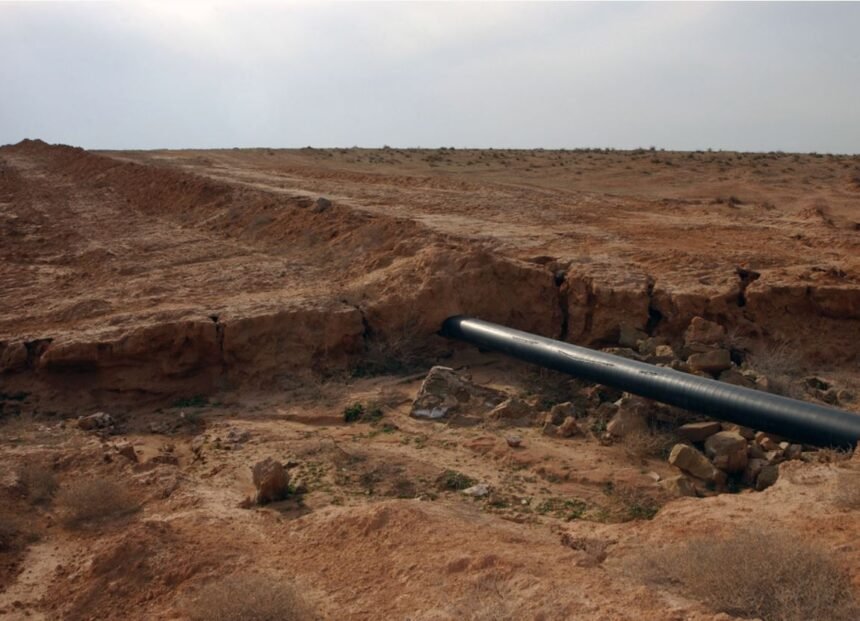
The company, which commissioned its flagship refinery in Nigeria in 2024, is accelerating plans to strengthen fuel distribution infrastructure across the continent, including pipelines, marine terminals and storage depots. Chief Executive Officer David Bird said Dangote is considering pipeline developments linking Namibia to Botswana, Zimbabwe, Zambia, South Africa and potentially the Democratic Republic of Congo as part of a broader strategy to improve fuel supply logistics and deepen market penetration.
“Probably the most developed is our Southwestern opportunity from the Namibia tank farm and then a pipeline through Botswana into Zimbabwe into Zambia—potentially down into South Africa and maybe as far up as into DRC,” Bird said during the conference.
READ: Tanzania to expand large-scale wind, solar energy procurement
Road to affordable fuel
The proposed development builds on an agreement signed in Harare in November to construct a 2,500-kilometre oil products pipeline from a planned storage depot in Walvis Bay, Namibia, into Botswana, Zimbabwe and Zambia. Dangote is also awaiting final approvals for a 240-million-barrel storage tank farm at Walvis Bay and has held discussions on developing storage infrastructure at Cameroon’s inactive Sonara refinery.
To support exports into smaller African markets, the company is constructing a four-berth marine jetty at its Nigerian refinery capable of handling LR2 tankers and smaller vessels. The investment is expected to improve the movement of refined products into countries with limited port and storage infrastructure.
Bird said Dangote also intends to develop a second refinery in East Africa based on the Nigerian refinery model. The expansion would raise the group’s overall refining capacity target from 1.4 million barrels per day to 2.1 million b/d over time.
The company believes improved pipeline connectivity could significantly lower fuel transportation costs across Africa, where many landlocked countries still depend heavily on trucking networks that can take several days to deliver fuel supplies. According to Bird, better fuel access could also support industrial development, particularly in mining-intensive economies such as Zambia where diesel shortages and expensive power generation continue to constrain copper production.
“We’ll be able to bring reliable, dependable, affordable clean fuels to support that power development in these parts of the world,” he said.
While Dangote is pursuing cross-border pipeline opportunities elsewhere in Africa, the company remains cautious about pipeline investments in Nigeria due to security threats and sabotage risks. Founder Aliko Dangote previously indicated the company would instead rely more heavily on compressed natural gas-powered trucks to distribute fuel domestically.
Dangote acquired around 4,000 CNG trucks for rural fuel distribution, although much of the fleet remains inactive following protests and disruptions by transport operators last year. Company figures show West Africa accounted for approximately 56% of Dangote’s fuel sales in 2025, equivalent to around 4 million metric tons. Europe received 1.1 million mt, while Southern Africa and Central Africa imported 158,000 mt and 30,000 mt respectively. Recent geopolitical disruptions in the Middle East have also opened new export opportunities for the refinery. The company reportedly shipped a record 30,000 barrels per day of fuel to South Africa in March and completed its first fuel export cargo to China in mid-May.
Although Dangote has so far relied on international trading firms to market much of its refined output, Bird said the company is increasingly seeking direct supply agreements with governments and industrial buyers.The refinery operator is also targeting operational efficiencies, with Bird stating the company aims to achieve refining costs per barrel that are about 30% lower than the global industry average.
Analysts at S&P Global Energy CERA expect Nigerian oil demand to rise from around 450,000 barrels per day currently to about 740,000 b/d by 2035, potentially making Nigeria Africa’s largest oil-consuming market ahead of South Africa. Total African liquids demand is projected to average approximately 4.8 million b/d in 2026.