

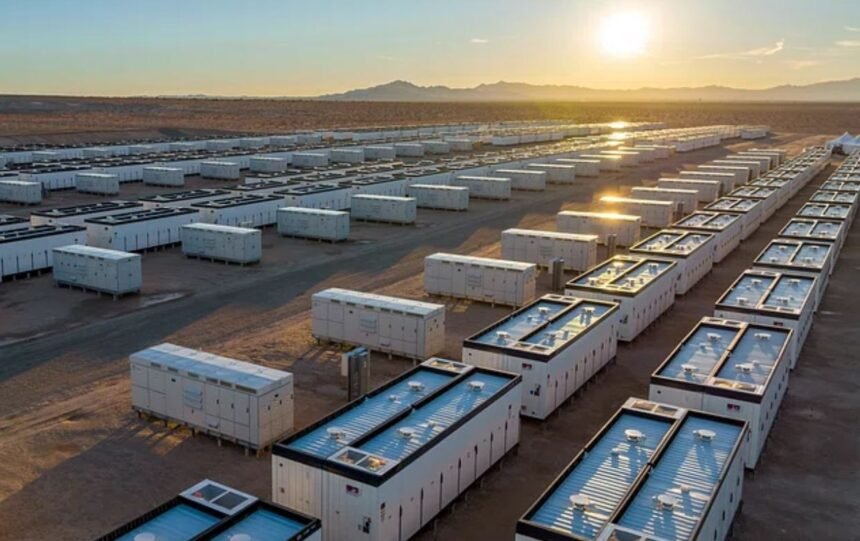
The government of Ghana is set to roll out a major battery energy storage programme as part of efforts to strengthen its electricity system and support the growing share of renewable energy in the mix.
Energy and Green Transition Minister John Jinapor made the announcement and said the government plans to procure 200 MW of battery storage capacity through a competitive bidding process. The initiative is aimed at improving power supply during peak evening hours, when demand rises and solar generation declines.
READ: Dangote, GCL seal US $4.2bn natural gas deal
Energy strategy
The proposed capacity represents a significant increase from Ghana’s current battery storage base, which stands at about 10 MWh, according to the Africa Solar Industry Association. The expansion is expected to ease pressure on the grid, enhance reliability, and reduce dependence on thermal power plants that rely on oil and gas.
The planned procurement comes as Ghana continues to scale up its renewable energy capacity. The country has installed roughly 112 MW of utility-scale solar to date and is advancing a 200 MW solar project in the Greater Accra region, with the first phase expected online by the end of the year. Authorities are also implementing a national rooftop solar programme targeting 4,000 installations with a combined capacity of 137 MW.
Industry observers say the addition of battery storage could play a critical role in improving the effectiveness of renewable generation by allowing excess daytime power to be stored and used when demand is highest. The battery initiative aligns with Ghana’s broader energy strategy, which includes raising electrification levels to 99% by the end of the decade and increasing the share of renewables in the generation mix to 50% by 2060. Once implemented, the storage programme is expected to contribute to grid stability, lower system costs over time, and support the country’s long-term energy transition.