

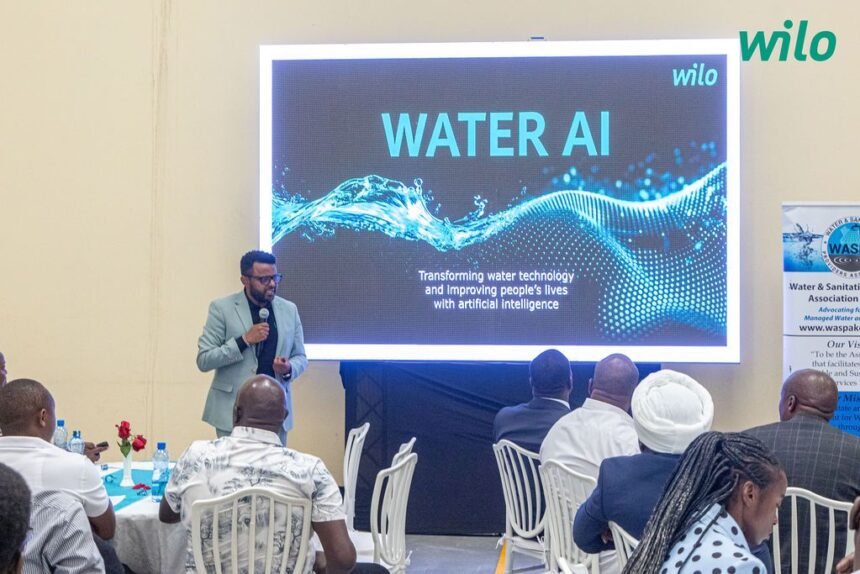
In a significant development for the region’s water sector, Wilo East Africa recently hosted members of the Water and Sanitation Providers Association (WASPA) at its Nairobi assembly plant and academy. The bimonthly engagement brought together over 80 water professionals, including utility leaders and private sector partners, for an intensive session focused on practical solutions for water and wastewater systems.
- Why Pump Test Bench East Africa Matters for Utilities
- First ISO 9906 Grade 1B Pump Test Bench in East Africa
- From Theory to Practice: Inside Wilo’s Assembly Plant
- Collaboration Driving Water Sector Innovation
- Smart Water Systems and AI Integration
- Collaboration is the Sector’s Future
- Participating Utilities and Industry Players
- Pump Test Bench East Africa Impact
- Future-Ready Water Infrastructure
The event, held at Wilo’s assembly facility, marked a powerful breakthrough in the region’s ongoing efforts to modernize water infrastructure. Attendees were offered a firsthand look at advanced pump technologies, but the undisputed highlight was the unveiling of the first ISO 9906 Grade 1B pump test bench in East Africa — a facility that promises to fundamentally reshape quality standards across the sector.
Why Pump Test Bench East Africa Matters for Utilities
Water utilities across East Africa are contending with a perfect storm of challenges. Rising energy costs continue to erode operational budgets, aging infrastructure struggles to meet growing service demands, and non-revenue water (NRW) remains a persistent drain on financial sustainability. Industry experts estimate that energy alone can account for up to 40 percent of a water utility’s operating costs, leaving little room for investment in system upgrades or service expansion.
Against this backdrop, efficient systems are no longer a luxury — they are a necessity. Wilo presented its range of energy-efficient pump solutions, specifically designed to help water service providers reduce operational costs while improving overall system performance. More importantly, these solutions directly support the fight against NRW by significantly reducing energy consumption and optimizing water distribution networks.
The message was clear: practical, proven technology exists today to address these challenges, and it is now available locally.
First ISO 9906 Grade 1B Pump Test Bench in East Africa
The major highlight of the engagement was the public showcase of Wilo East Africa’s ISO 9906 Grade 1B certified pump test bench — the first facility of its kind in East Africa. This state-of-the-art test bench allows for accurate pump performance testing under controlled conditions, ensuring that every unit meets stringent global efficiency and reliability standards before it enters the market.
Belete A. Matebe, Managing Director of Wilo East Africa, personally guided members through the facility. He explained how the test bench directly supports government efforts to eliminate substandard pumps from the region — a persistent problem that has undermined system reliability and inflated energy costs for years. By raising the bar for efficiency and quality, the facility promises to transform procurement standards across the sector.
The test bench delivers three critical advantages. First, it eliminates substandard pumps from the market by providing verifiable performance data. Second, it improves system reliability by ensuring only certified equipment enters service. Third, it raises efficiency benchmarks across the region, creating a new standard for utilities and suppliers alike.
Wilo East Africa stated that its ISO 9906 Grade 1B test bench had been operational since 2023 and had recently supported engagements with WASPA and utility stakeholders. The company noted that utilities were increasingly prioritizing efficiency, reliability, and lifecycle performance in their decision-making. It added that it looked forward to further collaborations aimed at translating tested performance into tangible operational impact across the sector.
From Theory to Practice: Inside Wilo’s Assembly Plant
Beyond the technical demonstrations, attendees toured Wilo’s assembly plant, where they moved beyond theory to interact directly with pump systems and technologies. This hands-on approach allowed utility managers and engineers to explore practical solutions applicable to their own operations, bridging the gap between product specifications and real-world application.
Technical guidance was provided by David Mugo, Production Manager, and Francis Munyao, Sales Engineer, who walked participants through assembly processes, quality control measures, and maintenance best practices. For many attendees, the tour offered a rare opportunity to see how advanced pump systems are built, tested, and prepared for deployment across water and wastewater networks.
Collaboration Driving Water Sector Innovation
The engagement was not solely about hardware. It also created valuable space for industry dialogue, allowing members to discuss the challenges they face and engage with key stakeholders shaping the sector’s future. Participants held discussions with representatives from the Water Tribunal, Open Capital, and Andersen on emerging issues ranging from regulatory compliance to financing mechanisms for infrastructure upgrades.
Christine Amira, Marketing and Sustainability Manager at Wilo East Africa, welcomed participants and framed the engagement around collaboration and knowledge exchange. She noted that partnerships accelerate innovation and improve service delivery outcomes — a sentiment echoed throughout the day’s proceedings.
Smart Water Systems and AI Integration
Wilo also introduced its Water AI and smart system solutions to the assembled professionals. These technologies enable real-time monitoring, predictive maintenance, and energy optimization across water networks. Globally, smart water systems have been shown to reduce downtime by up to 30 percent while extending the lifespan of critical assets.
For East African utilities looking to modernize without massive capital expenditure, these intelligent systems offer a practical pathway forward. By integrating sensors, data analytics, and automated controls, utilities can transition from reactive maintenance to predictive management — a shift that delivers immediate cost savings and long-term reliability gains.
Collaboration is the Sector’s Future
Anthony Njaramba, CEO of WASPA, underscored the importance of partnerships in driving sector progress. Speaking at the event, he emphasized that the water and sanitation sector cannot advance in isolation. He described the engagement as a powerful reminder of what becomes possible when utilities, innovators, and industry partners come together with a shared purpose.
WASPA has consistently championed meaningful collaboration across the sector, and this event represented a tangible example of that commitment in action. By bringing together utility leaders, technology providers, development partners, and regulators, the association is helping to build an ecosystem where knowledge flows freely and solutions are co-created.
Participating Utilities and Industry Players
The engagement drew a wide cross-section of the water sector. Key utilities in attendance included Kisumu Water and Sanitation Company Limited, Nyeri Water and Sanitation Company Limited, Eldoret Water and Sanitation Company, Embu Water and Sanitation Company Limited, Kericho Water and Sanitation Company Limited, Kitui Water and Sanitation Company Limited, and Nakuru Water and Sanitation Services Company.
Development partners and private sector participants included Aqua for All, Vitens Evides International (VEI), Grundfos, Ebara Pumps East Africa, Esri, Family Bank, HFC Kenya, Co-operative Bank of Kenya, Apex Piping Systems Ltd, Smart People Africa Ltd, Betterline Water Ltd, and Danco Capital Limited. Government representatives from the Ministry of Water, Sanitation and Irrigation, alongside Tana Water Works Development Agency, Athi Water Works Development Agency, and Central Rift Valley Water Works, also participated.
Pump Test Bench East Africa Impact
The introduction of certified testing infrastructure in Nairobi marks a powerful turning point for the region. For years, utilities have struggled with substandard equipment that fails prematurely, consumes excessive energy, and drives up maintenance costs. The ISO 9906 Grade 1B pump test bench changes this dynamic by providing an independent, verifiable standard for pump performance.
The benefits are concrete: higher equipment quality, lower lifecycle costs, improved system efficiency, and stronger regulatory compliance. For utilities, this translates directly into better service delivery and improved financial sustainability. For consumers, it means more reliable access to clean water and reduced pressure on household budgets.
Future-Ready Water Infrastructure
Wilo confirmed that hosting the event aligns with its CONNECTING sustainability strategy — an approach centered on driving partnerships and bringing stakeholders together to accelerate progress in efficient, reliable, and future-ready water infrastructure. The company noted that hosting the engagement at its assembly plant was intentional, designed to immerse participants in the very space where innovation, testing, assembly, and service come together.
As East Africa continues to urbanize and industrialize, the demand for efficient water infrastructure will only grow. The pump test bench East Africa solution — alongside smart systems, energy-efficient pumps, and collaborative industry platforms — will play a central role in meeting that demand. Events like the WASPA engagement at Wilo demonstrate that the region is not waiting for solutions to arrive from abroad. It is building them locally, testing them rigorously, and deploying them strategically.
Are utilities in your region adopting certified pump testing and smart systems? Share your experience or insights with Pumps Africa. Let’s build a stronger, more efficient water sector together.