

Angola has achieved a major milestone in its gas sector with the first deliveries from the offshore Quiluma-Maboqueiro project, marking the country’s entry into non-associated gas production.
Operated by Azule Energy as part of the New Gas Consortium (NGC), the US $2.2bn development is Angola’s first standalone gas project, designed to supply feedstock to the Angola LNG facility in Soyo while also supporting domestic gas demand.
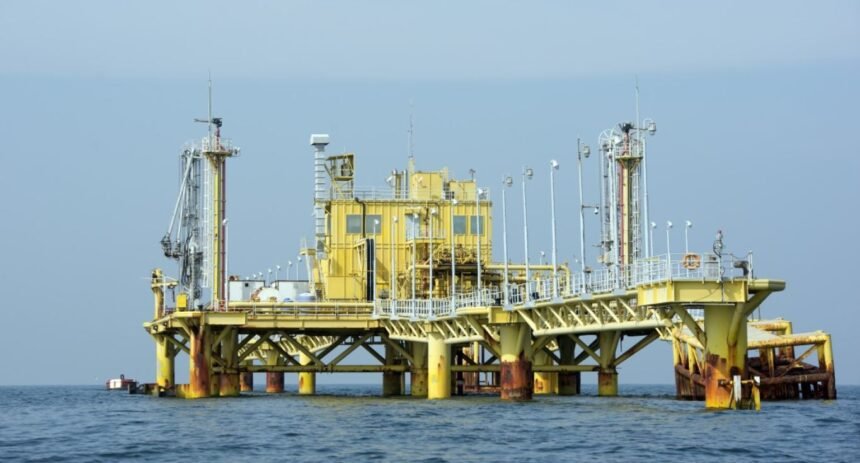
The project taps an estimated 325 million barrels of oil equivalent across the Quiluma and Maboqueiro fields. Development includes 13 wells and two offshore wellhead platforms, with production transported via a 100-kilometre pipeline to an onshore processing plant capable of handling 400 million cubic feet per day (MMcfd) of gas and up to 20,000 barrels per day of condensate.
READ: Royal Power & Energy awarded contract to expand renewable mini-grids in Nigeria
Production operations
Gas was first introduced into the onshore plant in November 2025, marking the start of production operations. Initial exports are set at around 150 MMcfd, with output expected to ramp up to approximately 330 MMcfd by the end of 2026—equivalent to roughly 2 million tonnes per annum of liquefied natural gas. Angola’s upstream regulator has indicated production could reach about 314 MMcfd by year-end.
The Quiluma platform serves as the project’s main production hub and is the largest structure ever constructed at the Ambriz fabrication yard, featuring a 2,500-tonne jacket and 2,700-tonne topsides. Beyond production, the project has delivered notable local economic impact. More than 5,000 Angolan workers were engaged at peak construction, and ongoing operations are expected to sustain both direct and indirect employment over the project’s lifespan.
Azule Energy, a joint venture between Eni and BP, holds a 37.4% stake in the consortium. Other partners include Chevron (31%), Sonangol (19.8%), and TotalEnergies (11.8%). The start of gas deliveries underscores Angola’s broader strategy to diversify its energy mix, monetise gas resources, and strengthen its position in global LNG markets.